Which Wine Tram line is the best in Cape Town?
An honest line-by-line look at the Franschhoek Wine Tram's color-coded routes, what each one reaches, what the ticket costs, and how to pick the right line for your day.
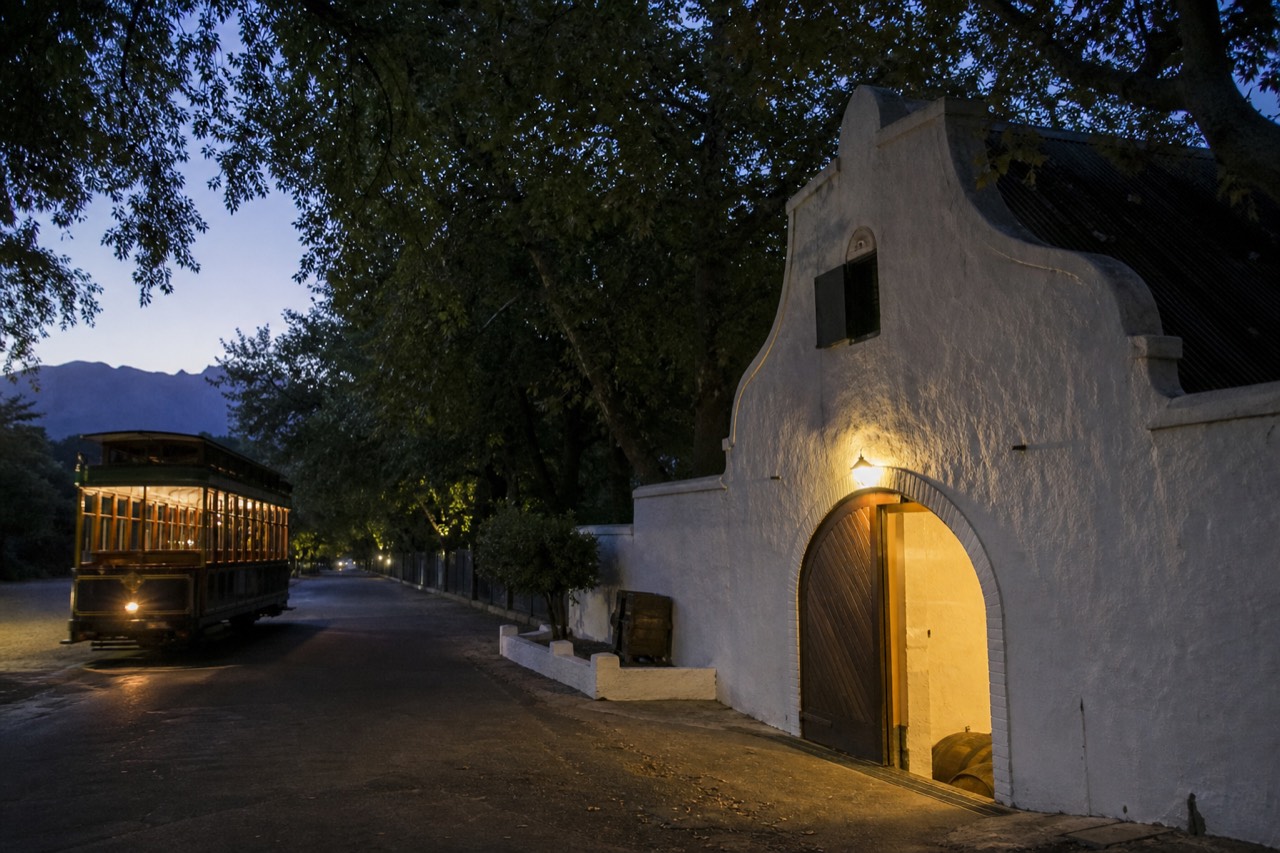
Which Wine Tram line is the best in Cape Town?
There is no single best line, because the honest answer starts with a correction: no literal "Cape Town Wine Tram" exists. The real product is the Franschhoek Wine Tram, roughly a one-hour drive from central Cape Town, running five color-coded hop-on-hop-off loops through the Franschhoek Valley. The line that suits you best depends on which estates you want and how long you want to spend in the valley.
That correction matters more than most first-time visitors expect. Search for a "Cape Town Wine Tram" and you will find transfer packages, blog posts and forum threads that all blend the city with the valley, and the naming confusion leads real travelers to book the wrong thing or to expect a tram departing from the city center. It does not. The tram lives in Franschhoek, a small gourmet village about 75 km from central Cape Town, a drive of roughly 60 to 70 minutes, and about 30 minutes further inland from Stellenbosch via scenic passes like Helshoogte.
The tram itself is genuinely worth the planning. It runs five color-coded lines, using a mix of vintage-style Brill trams on narrow-gauge tracks and open-air tram-buses, stopping at wine estates across the valley. Each line serves roughly 7 to 9 estates, and the network collectively reaches around 30, including names like Rickety Bridge, Grande Provence, Boschendal, Vrede en Lust, Plaisir de Merle, Allée Bleue, Haute Cabrière, Mont Rochelle and La Bri. Service loops run hourly, and you hop on and off at whichever estates catch your eye, paying for tastings and meals separately at each stop.
Before choosing a line, it helps to see the valley in context. Franschhoek is the smaller, more polished and food-driven of the winelands towns, with French Huguenot heritage, a compact walkable center of boutiques and galleries, and a curated, romantic feel. The tram is its signature experience, and the line you pick effectively designs your day: which vineyards you stand in, which lunch you end up at, and how much time you spend riding between them. Our companion piece on how to spend a day in Franschhoek covers the non-wine half of that equation.
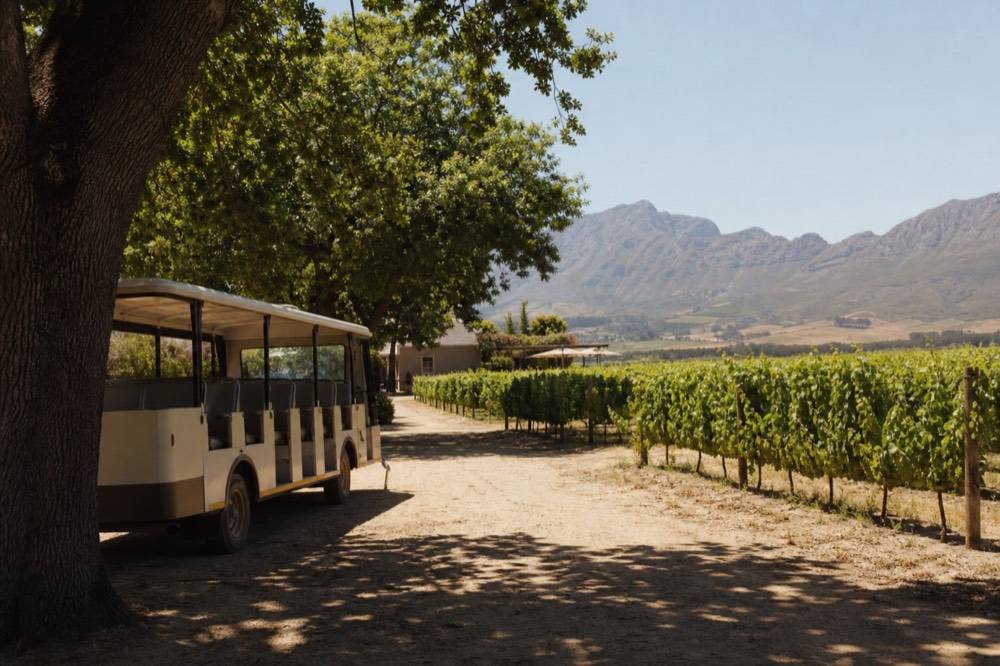
Is there a wine tour tram in Cape Town?
No. There is no wine tram operating in Cape Town itself, and no product called the "Cape Town Wine Tram" exists. The real, operating product is the Franschhoek Wine Tram, run by its own operator from the Franschhoek Valley, about an hour's drive from the city. Packages sold "from Cape Town" bundle a coach or shuttle transfer with a tram ticket, which is where the naming confusion begins.
The distinction is worth spelling out plainly because it trips up a lot of trip planning. The tram's terminals sit in Franschhoek itself, in the Cabriere Street area, or at Groot Drakenstein on the valley's edge. Nothing on rails departs from the V&A Waterfront or anywhere else in the city. What you can book from Cape Town is a combined product: round-trip transfer plus tram ticket, typically departing from the V&A Waterfront or selected hotels. Those transfer-and-tram bundles commonly run around US$40 to US$60 per person and up, depending on the operator and inclusions.
The tram is confirmed operating through 2025 and 2026, with recent independent reporting describing rides in February and May 2026, and its official site at winetram.co.za carrying live schedules and line maps. Two other hop-on-hop-off products in the wider winelands are also real but distinct: the Vine Hopper, a Stellenbosch minibus service, and the Stellenbosch Wine Tractor, a tractor-based tour of Golden Triangle estates. Neither is a Wine Tram line, and neither is bookable through this site's own tours, so treat them as separate options if your plans extend beyond Franschhoek.
A practical note on the naming: because "Cape Town Wine Tram" is the phrase most people search for, plenty of listings use it in their titles while delivering the Franschhoek product with a transfer. That is not a scam, just imprecise marketing. What it means for you is simple: check the departure point and the destination valley before booking anything, and if you want more depth on the trade-offs between riding the tram and hiring a driver, our Wine Tram versus guided tour comparison works through the whole question.
Where does the wine tram stop?
The tram stops at wine estates along five looping routes, with each line serving roughly 7 to 9 estates and the network collectively reaching around 30 across the Franschhoek Valley. Confirmed estate names include Rickety Bridge, Grande Provence, Boschendal, Vrede en Lust, Plaisir de Merle, Allée Bleue, Haute Cabrière, Mont Rochelle and La Bri, plus the two terminals at Franschhoek village and Groot Drakenstein.
The exact estate assigned to each color line shifts between seasons and timetables, so the operator's live line map is the only reliable source for tomorrow's assignment. What stays stable is the pool of estates and the character of the valley they sit in. To help you picture the stops before you pick a line, here is what the confirmed estates are known for, using only what the verified research supports.
| Estate stop | What it is known for |
|---|---|
| Boschendal | Historic estate; opened the fire-focused Arum restaurant in its 1812 cellar in November 2025 |
| Haute Cabrière | Long-standing estate known for its cellar and position above the village |
| Mont Rochelle | Hillside estate toward the top of the valley |
| Grande Provence | Estate with gallery and dining grounds close to the village |
| Rickety Bridge | Compact estate a short hop from the village terminal |
| Plaisir de Merle | Larger estate toward the Simondium side of the valley |
| Vrede en Lust | Family estate on the valley's outer loop |
| Allée Bleue | Estate with broad grounds and event spaces |
| La Bri | Small boutique estate on the quieter side of the valley |
One structural point that first-time riders miss: the lines do not interconnect mid-loop. You ride one line for the day, so the estates on that line are your menu. If a specific cellar is the reason you are going, confirm which line reaches it on the day you travel before you commit, because the alternative is a taxi ride across the valley. Terminals also matter for timing: lines departing from the village terminal let you start with coffee and end with dinner on foot, while Groot Drakenstein departures suit travelers arriving by transfer from Cape Town or Stellenbosch.
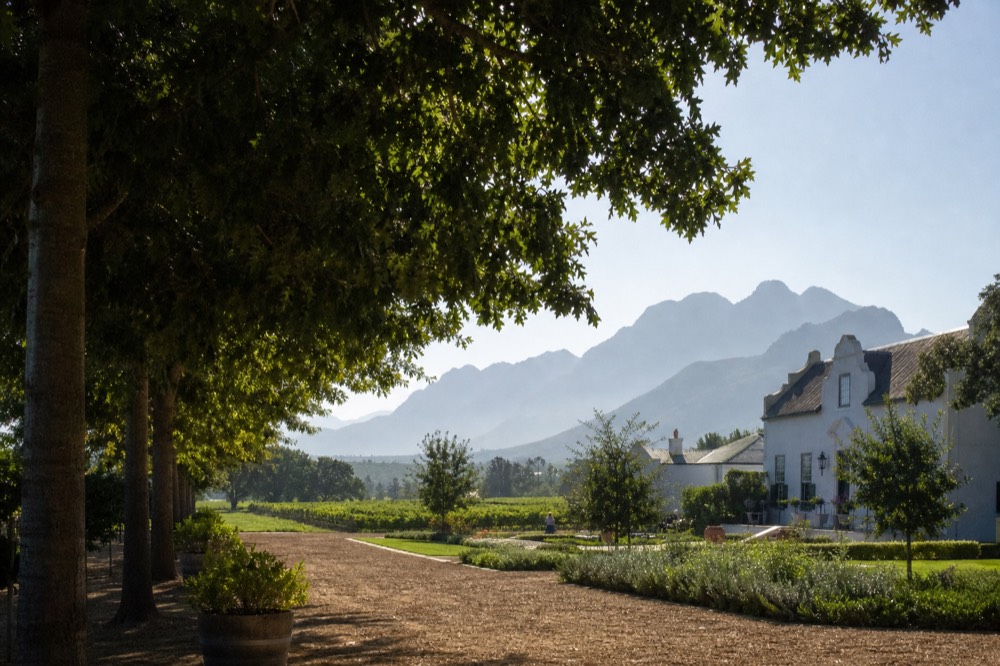
How do the color-coded lines actually differ?
The five lines, Red, Blue, Pink and a combined Orange/Navy/Green line in the operator's current grouping, differ in three practical ways: which estates each loop serves, whether the vehicle is a rail tram or an open-air tram-bus, and the direction and duration of the circuit. Every line runs hourly hops, covers 7 to 9 estates, and takes a full day to ride properly, so the differences are about destinations and vehicle, not pace.
Start with the vehicle, because it surprises people. Only some stretches of the network use the vintage-style Brill trams on narrow-gauge tracks; other lines run open-air tram-buses that look the part but ride on roads. Both are pleasant, and the open-air buses arguably beat the rail tram on warm days for views and airflow. If riding the actual rail tram is the romantic draw for your group, confirm which lines use it on your travel date before choosing.
Then think about valley geography. Estates cluster in three loose zones: the village-adjacent stops within walking energy of Franschhoek's center, the mid-valley estates along the main road, and the outer-loop estates toward Simondium and Groot Drakenstein. A line weighted toward village-adjacent stops gives you a relaxed, walkable day with long lunches. A line reaching the outer loop trades convenience for bigger grounds and, often, fewer queues at the tasting counter.
The third difference is scheduling. Because hops run hourly and each stop deserves at least an hour for a tasting, plus more for lunch, a realistic day fits three, maybe four estates. Lines with shorter hops between stops let you squeeze in an extra cellar; lines with long stretches between estates force a choice between depth and coverage. That arithmetic, more than any ranking, is what "best line" really means: the line whose rhythm matches your appetite.
How much does the Wine Tram cost and when does it run?
A hop-on-hop-off tram ticket costs R350 per adult, with children aged 3 to 17 at R90 and under-3s free. Tastings and meals are not included; estate tasting flights typically run R60 to R260 per person extra, commonly waived or refunded with a bottle purchase. The tram runs daily except major holidays, specifically 24 to 25 December and 31 December to 1 January.
Budgeting the full day is where the real number lands. The tram ticket itself is the smallest single line item; what adds up are the tasting flights at each estate and lunch, so a day of three stops plus a meal lands well above the ticket price on its own, and premium flights push it higher. Curated full-day guided alternatives built around the valley run considerably higher, in the R1,900 to R3,500 per person range, which is the honest price of someone else handling the logistics.
| Cost item | Typical figure | Notes |
|---|---|---|
| Adult tram ticket | R350 | Hop-on-hop-off, all day, one line |
| Child ticket, 3-17 | R90 | Under 3 rides free |
| Estate tasting flight | R60-R260 pp | Paid at each estate; often waived with a bottle purchase |
| Transfer from Cape Town | Roughly US$40-60+ pp bundled | Coach or shuttle plus tram ticket, varies by operator |
| Curated full-day guided options | R1,900-R3,500 pp | Higher-end guided alternatives |
Timing shapes the experience as much as the line does. Peak crowding in the winelands runs December through February and into early March, and the tram is one of the first places that pressure shows: popular estates fill by midday, and lines at boarding points stretch. Shoulder periods, September to November or post-harvest March to April, balance crowds against activity, and spring brings warming days of roughly 18 to 24°C with lower prices than peak summer. Book ahead for any peak-period date, and note that the drinking age at every tasting room is 18, with ID required if you look younger, under South Africa's liquor rules.
Which line should you pick for your trip?
Pick the line that reaches the two or three estates you actually care about, then let the rest of the day fill in around them. If you have no specific cellar in mind, favor a line weighted toward village-adjacent stops for a relaxed first visit, or an outer-loop line if you want bigger grounds and thinner crowds. Confirm the vehicle type and the day's line map on the operator's site before booking, because assignments shift.
For a first visit, the village-weighted logic is hard to beat. You start and end within walking distance of Franschhoek's restaurants, you can bail early without feeling stranded, and the hops are short enough that a missed tram costs you an hour rather than an afternoon. The trade-off is that these are also the busiest stops, so arrive at your first estate early, ideally on the first departure of the day, and save the most popular cellar for late afternoon when day-trippers thin out.
For a second visit, or for travelers who have already done the village, the outer-loop lines change the character of the day entirely. The estates toward Simondium and Groot Drakenstein have broader grounds, more working-farm texture and, on most days, noticeably shorter queues at the tasting counter. You give up walkability and lunch spontaneity, so book a table at whichever estate restaurant your line reaches rather than gambling on a spot.
For groups split between wine lovers and everyone else, the tram is a rare compromise that works: riders who want to taste hop off at every stop, while the rest ride the loop, take in the mountain views and meet up at lunch. That flexibility is the tram's real advantage over a fixed guided itinerary, and it is the reason the line choice deserves ten minutes of planning rather than a coin flip at the terminal.
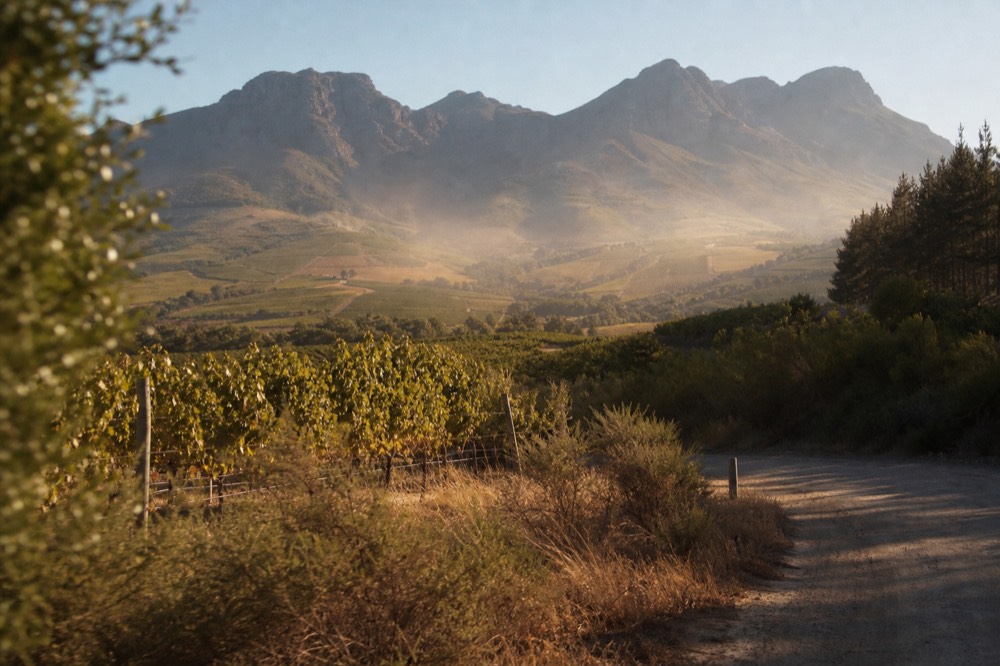
Is the Wine Tram worth it compared to driving yourself?
For most visitors, yes, and the strongest argument is legal rather than scenic. South Africa's drink-driving limit for ordinary drivers is 0.05 g per 100 ml of blood, but professional drivers, including holders of a Professional Driving Permit, are held to a stricter 0.02 limit. Your own tour or shuttle driver is therefore legally bound to a tougher standard than you are, which makes an organized ride a genuinely safer structure for a day of tastings.
The arithmetic of self-driving is unforgiving. Three estates, a tasting flight at each, and you are accumulating alcohol across a full afternoon on mountain roads, with the "Cape Doctor" south-easterly wind, which blows September through March, adding gusts to the passes. Tasting rooms provide spit buckets as standard and encourage their use for anyone driving afterward, and that discipline works, but the tram removes the question entirely. You ride, you taste, you never reach for car keys.
The tram also wins on logistics inside the valley. Estate parking fills in peak season, tasting-room bookings are widely recommended or required between November and March, and a fixed line forces a rhythm onto the day that stops the classic winelands mistake of lingering too long at stop one and rushing everything after. The counter-argument is real, though: the tram locks you to one line's estates, while a private driver can cross regions, mixing Franschhoek with Stellenbosch or Paarl in a single day. If breadth matters more than the ride itself, a driver is the better tool, and our Franschhoek private wine tour guide covers that route in detail.
For travelers who want the tram experience without any of the planning friction, a guided full-day tasting tour built around the valley handles the transfer, the line choice and the timing in one booking. It costs more than the raw ticket, but it converts a day of logistics decisions into a day of tasting decisions, which for plenty of visitors is money well spent.
The self-guided hop-on-hop-off ticket remains the simplest way to ride, though. At R350 per adult it is the cheapest entry point into the valley's wine scene, and once you have picked your line, the day largely plans itself.
The short answers: there is no tram in Cape Town itself, the real product runs five color-coded lines through the Franschhoek Valley, an adult ticket costs R350, and the best line is the one reaching the estates you actually want to visit. The questions below cover the details travelers ask most often.
Common questions about the Wine Tram
Which Wine Tram line is the best in Cape Town?
There is no universal best, because no literal Cape Town Wine Tram exists. The real product, the Franschhoek Wine Tram, runs five color-coded lines, and the best one is whichever reaches the two or three estates you most want to visit. Confirm the day's line map on the operator's site before booking, since estate assignments shift between seasons.
Is there a wine tour tram in Cape Town?
No. The tram operates in the Franschhoek Valley, roughly an hour's drive from central Cape Town. Products sold "from Cape Town" bundle a coach or shuttle transfer with a tram ticket, typically departing from the V&A Waterfront or selected hotels, but no tram runs from the city itself.
Where does the wine tram stop?
Each line serves roughly 7 to 9 estates, with the network collectively reaching around 30 across the valley, including Boschendal, Haute Cabrière, Mont Rochelle, Grande Provence, Rickety Bridge, Plaisir de Merle, Vrede en Lust, Allée Bleue and La Bri. Terminals sit at Franschhoek village and Groot Drakenstein.
How much does the Wine Tram cost?
The hop-on-hop-off ticket is R350 per adult, R90 for children aged 3 to 17, and free for under-3s. Tastings and meals are extra, typically R60 to R260 per person per estate, often waived or refunded with a bottle purchase.
When does the Wine Tram run?
Daily, except major holidays: 24 to 25 December and 31 December to 1 January. Hops run hourly on each loop, and the service may run reduced lines in winter or during valley events, so check the operator's schedule for your date.
Can you do the Wine Tram without a car?
Yes, and that is the point. Most visitors arrive by transfer from Cape Town, often bundled with the tram ticket, or as part of a guided full-day tour. Once in the valley, the tram is the transport, so no one in your group needs to drive after tasting.
Choosing a line comes down to a short checklist: the estates you care about, the vehicle you want to ride, and whether your day leans relaxed or ambitious. Cape Town Wine Tours exists to make exactly these decisions easier, and the tram, whatever line you pick, remains the most enjoyable way to hand the driving to someone else for the day.