What time does the Wine Tram start?
The Franschhoek Wine Tram runs daily hourly loops through the valley. Here is how start times, ticket prices, ride lengths and advance booking actually work.
What time does the Wine Tram start?
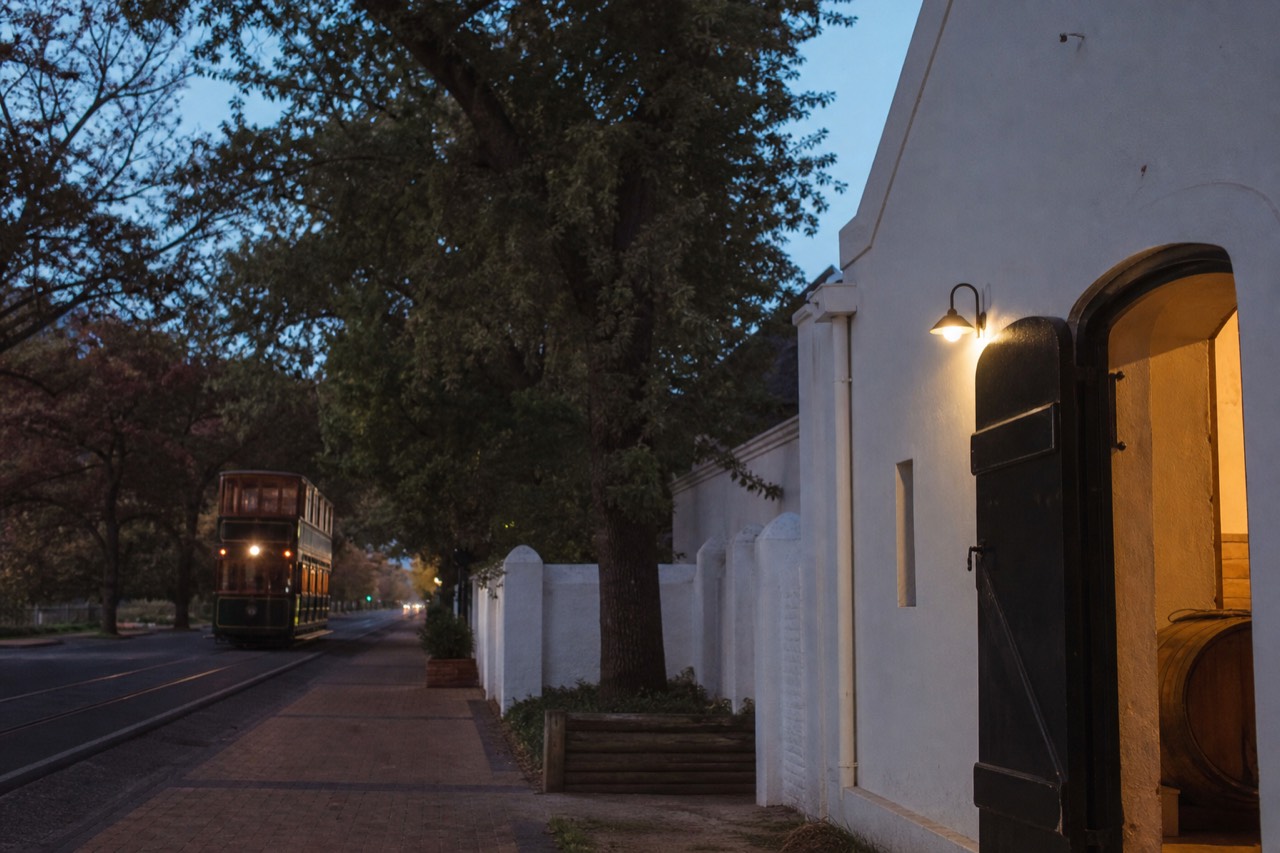
The Franschhoek Wine Tram runs its hop-on-hop-off loops hourly through the day, daily except 24-25 December and 31 December-1 January, so the honest answer is that there is no single "start time": your day starts with whichever hourly departure you board at the Franschhoek terminal or the Groot Drakenstein terminal. The exact first departure of the morning varies by line and season, and the operator publishes the current timetable on its live listing, so check there before locking in a pre-dawn plan. What matters for planning is the rhythm: trams and open-air tram-buses circle the valley roughly every hour, stopping at 7-9 estates per line, and you hop on and hop off at your own pace between them.
One point of clarification that trips up a lot of first-time visitors: there is no literal "Cape Town Wine Tram." The product people mean is the Franschhoek Wine Tram, based in the Franschhoek Valley, roughly a one-hour drive from central Cape Town. It is frequently packaged with transfers from the city, which is why the two names blur together in searches and forum threads. If you are staying in Cape Town and asking what time the tram starts, you are really asking two questions: what time your transfer leaves the city, and what time the first loop you can realistically catch departs from the valley terminal.
The transfer question is often the binding constraint. Franschhoek sits about 75 km from central Cape Town, a 60-70 minute drive, and roughly 30 minutes further inland from Stellenbosch via passes like Helshoogte. A full-day packaged experience that includes round-trip transport plus the tram ticket typically runs about US$40-60 per person, which is worth comparing against the cost and logistics of renting a car or arranging separate transfers when the whole point of the tram is not driving between tastings.
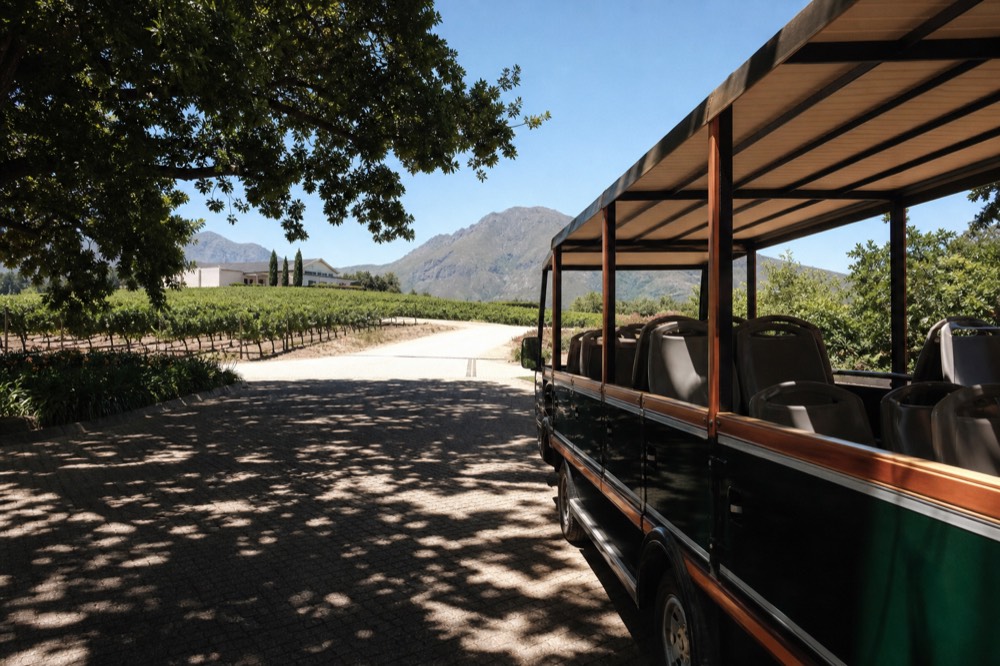
The tram itself uses a mix of vintage-style Brill trams on narrow-gauge tracks and open-air tram-buses, depending on the line. Five color-coded lines, including Red, Blue, Pink and the Orange/Navy/Green grouping, loop through the valley and collectively cover roughly 30 estates: names like Rickety Bridge, Grande Provence, Boschendal, Vrede en Lust, Plaisir de Merle, Allee Bleue, Haute Cabriere, Mont Rochelle and La Bri. Each line serves 7-9 of them, so the line you pick shapes your day more than the hour you start.
Do you need to book the wine tram in advance?
Yes, in practice, especially in peak season: there is no law requiring reservations for the tram, but seats on each loop are capacity-limited, demand is highest from December through February and into early March, and the general reservation norm across the Cape Winelands is to book ahead wherever you can. Exact booking guidance, including how far ahead each line sells out and what the current availability looks like, is on the operator's live listing, so treat that as the source of truth for your specific dates. What we can say from the established pattern is that peak-season weekends fill first, and that the packaged versions with Cape Town transfers tend to be the tightest because the coach seats are the scarce part.
The broader reservation norm in the winelands backs this up. Across Stellenbosch, Franschhoek, Paarl and Constantia, advance booking is widely recommended or required in practice, particularly at smaller boutique estates and during the roughly November-to-March peak. Larger, more commercial estates can often absorb walk-ins during published hours, but some named estates explicitly require booking for tastings. If your tram day is built around one specific estate's tasting room or lunch table, that booking matters more than the tram ticket itself, because the tram will get you there but cannot seat you.
There is also a seasonal logic worth knowing. Tourist crowding in the winelands is generally highest in December, January and February, driven by school holidays and summer demand. Shoulder periods, September through November or post-harvest March and April, offer a better balance of activity and elbow room. A spring weekday in the valley can feel almost local; a early-January Saturday is a different animal entirely, with queues at the most popular estates and full loops. If your dates are flexible, shifting even a few days off the peak can change the whole experience.
How long is a Wine Tram ride?
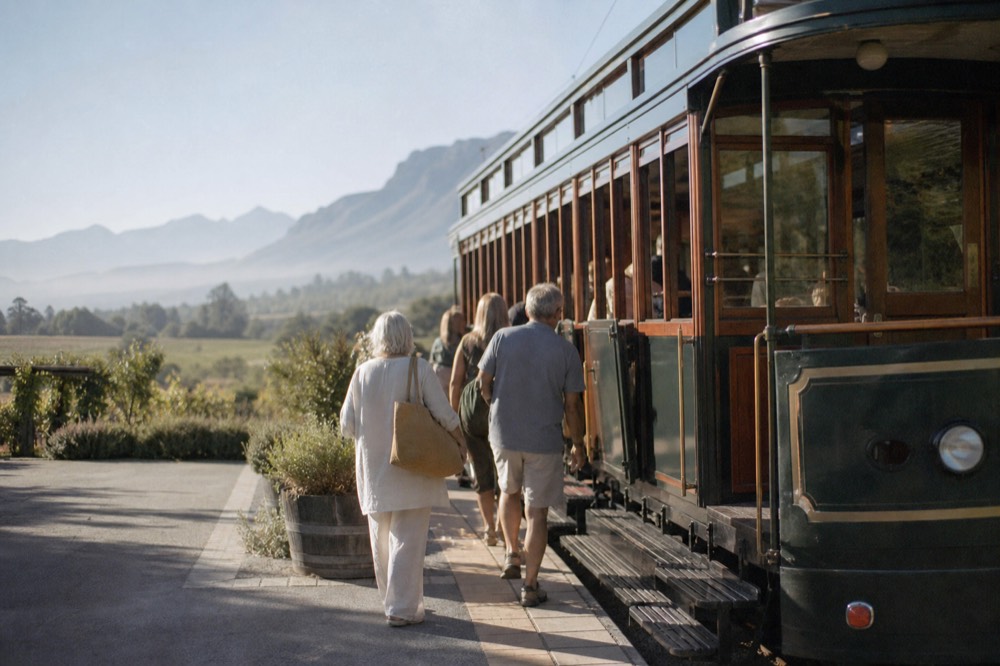
Each hop between estates is short, typically 5 to 15 minutes depending on the line and the distance between stops, but the tram is a loop system, so the real question is how long your day lasts: most riders structure a full day, arriving mid-morning and finishing in the late afternoon after three or four estates. Because trams circulate roughly hourly, the clock that governs your day is the gap between pickups, not the travel time itself. Spend 45 minutes at an estate and you will likely catch the next service; linger over a long lunch and you are planning around the one after that.
This loop rhythm is the tram's core design and its main constraint at once. With 7-9 estates on a line and an hourly cadence, a disciplined rider can comfortably visit three, maybe four, stops in a day including a proper meal. Riders who try to squeeze in five or six tend to end up rushing tastings, which defeats the purpose. The estates themselves are the destination; the tram is just the connective tissue, and the valley's compact geography is what makes the whole model work.
For context, a full-day guided winelands experience from Cape Town, door to door, generally runs 8-10 hours once you include the drive out, the drive back and the time in between. The tram-only version is shorter if you arrange your own transfer, since your day starts when you reach the valley terminal. Either way, plan for a full day, not a half-day errand. Franschhoek's compact, walkable village centre also rewards arriving early enough to browse the boutiques and galleries before or after your loop.
If you are weighing the tram against other ways of covering the winelands, our comparison of wine tram versus guided tour versus private driver breaks down the trade-offs in detail, and the question of which Wine Tram line is best matters more than most first-timers expect, since lines determine your estates.
How much does the Franschhoek Wine Tram cost?
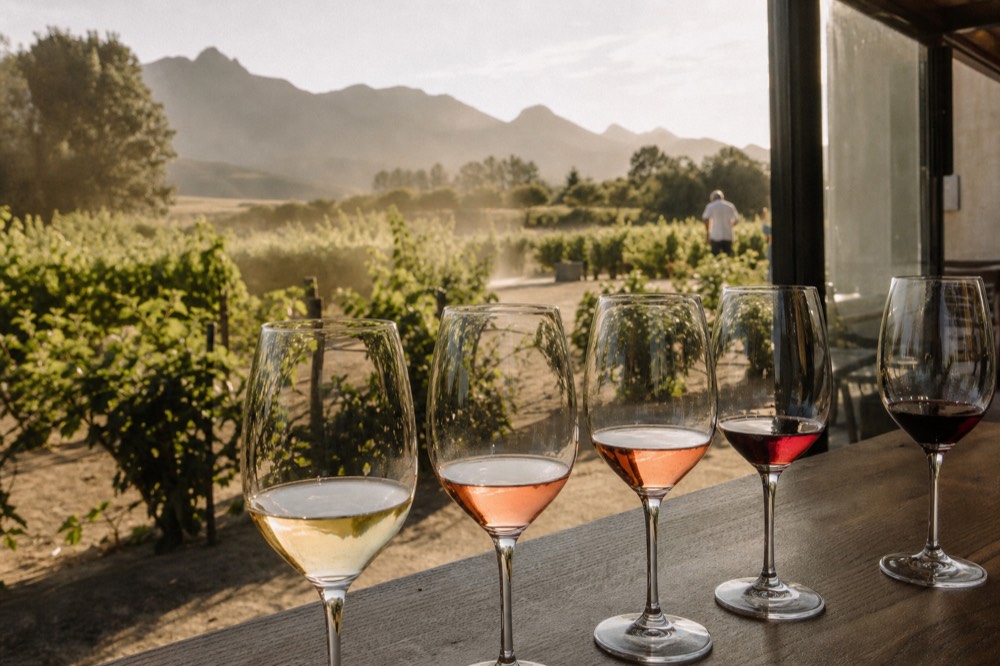
The hop-on-hop-off tram ticket costs R350 per adult, R90 per child aged 3-17, and children under 3 ride free; tastings and meals at the estates are extra, typically R60-R260 per person per estate. That structure is the single most important thing to understand about tram budgeting: the ticket is transport only. Your wine is billed separately at each stop, and a day of three tastings plus lunch adds up quickly against the base fare.
Here is a planning view of how the pieces fit together. Tasting fee ranges are the practical norm across the winelands rather than operator promises, so confirm current prices at each estate.
| Cost item | Typical figure | Notes |
|---|---|---|
| Tram ticket, adult | R350 | Hop-on-hop-off, all-day loop access |
| Tram ticket, child 3-17 | R90 | Under 3 rides free |
| Estate tasting flight | R60-R260 pp | Per estate; premium flights higher; often waived or refunded with a bottle purchase |
| Transfer from Cape Town | ~US$40-60 pp bundled | Round-trip coach transfer plus tram ticket in packaged experiences |
A few budgeting notes from the practical norm. Tasting fees across the winelands typically run R80-R250 per person for a standard flight, and many estates waive or refund the fee if you buy a bottle, which softens the arithmetic if you plan to take wine home. Spitting buckets are standard and encouraged when tasting across multiple estates in a day, a habit worth adopting regardless of whether you are driving, simply to keep your palate and your afternoon intact.
Two legal points apply to the money conversation. South Africa's minimum age to purchase or be served alcohol is 18, nationwide, and tasting rooms are licensed premises required to check ID for anyone who appears under 18, so bring passports for any 18-25 year olds in your group. And if you are weighing the tram against self-driving, note the two-tier drink-driving limit: ordinary drivers are held to 0.05 g per 100 ml of blood, but professional drivers, including many tour and shuttle drivers, are held to a stricter 0.02 g limit under the National Road Traffic Act. Your tram or tour driver is legally held to the tougher standard, which is a genuine argument for organized transport between tastings.
For a fuller picture of tram logistics end to end, the deeper Franschhoek Wine Tram guide walks through lines, estates, terminals and timing in detail.
What else should you know before your tram day?
The tram closes only for two holiday windows, 24-25 December and 31 December-1 January, runs daily otherwise, and your practical checklist is short: pick a line, book ahead in peak season, carry ID, and remember tastings are paid per estate on top of the R350 ticket. Beyond that, a little local knowledge goes a long way toward a smooth day in the valley.
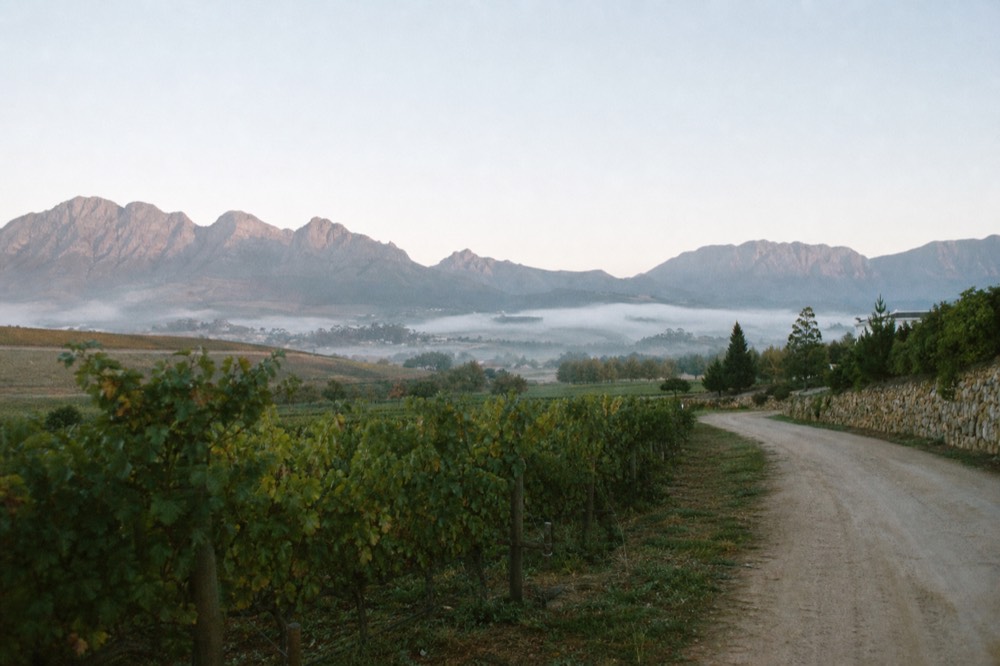
Timing your arrival matters more than most guides admit. Because loops run hourly, arriving in the valley mid-morning gives you the most complete day: you can catch a late-morning loop, do two estates before lunch, eat well, and finish with a final tasting before the loops wind down in the late afternoon. Arrive after lunch and you are choosing between two stops rather than four. This is also why the packaged Cape Town transfers, which handle the 60-70 minute drive and drop you at the terminal on a schedule, remove the most common way a tram day goes wrong: the late start.
Weather and season shape the experience too. The region has a Mediterranean climate, hot dry summers and cool wet winters, and the "Cape Doctor" south-easterly wind blows from September through March, cooling things down but occasionally making open-air tram-bus rides blustery. A spring or autumn visit trades peak-summer heat for greener or golden landscapes and thinner crowds. For a September 2026 visit, expect spring conditions: warming days, fewer crowds than the December-February peak, and no harvest activity, since the Cape crush typically runs late January through April.
It is also worth being honest about what the tram is not. There are other hop-on-hop-off products in the winelands, including a Stellenbosch tractor-based tour of Golden Triangle estates and a Stellenbosch minibus service called Vine Hopper, but these are separate operations, not Wine Tram lines and not bookable through this site's featured tours. The tram is a Franschhoek product, full stop. If your heart is set on Stellenbosch's oak-lined streets and its higher density of estates, a Stellenbosch-focused tour is the better fit, and the head-to-head case between the two towns usually comes down to energy versus polish.
For travelers who want the tram experience without any of the planning overhead, there is a middle path worth considering. A full-day guided tasting tour handles the Cape Town transfer, pairs the tram loop with structured tasting stops, and costs more than the bare ticket but less in mental overhead. As the publisher of Cape Town Wine Tours puts it in every planning conversation: the tram is the easiest winelands day to do independently, and also the easiest to under-plan.
The bare-ticket alternative deserves its own word here. Booking the hop-on hop-off tram experience on its own, and arranging your own way to the valley, keeps the day at the R350 fare plus tastings and gives you total freedom over start time and pace. The trade-off is that the transfer, the terminal arrival and the first loop all become your problem to coordinate, which is exactly the friction the packaged versions exist to remove.
Whichever route you take, the same core advice holds: decide your line before you arrive, book ahead if your dates fall anywhere near the December-February peak, and give the valley a full day rather than a rushed half. The hourly loop rewards planners and quietly punishes improvisers, and the difference between the two is usually one missed pickup at the wrong end of the valley.
The Wine Tram runs hourly loops daily except two holiday windows, costs R350 per adult with tastings extra, and rewards booking ahead in peak season: these are the six questions riders ask most before their first loop through the Franschhoek Valley. The answers below cover start times, booking, ride length, cost and line choice in one place, so you can plan the whole day without opening another tab.
Common questions about the Wine Tram
What time does the Wine Tram start?
The Franschhoek Wine Tram runs hourly loops daily, except 24-25 December and 31 December-1 January. There is no single start time; your day begins with the hourly departure you board at the Franschhoek or Groot Drakenstein terminal. Check the operator's live listing for the current first departure on your date and line.
Do you need to book the wine tram in advance?
In practice, yes, especially in peak season. Loop capacity is limited, demand peaks from December through February into early March, and the packaged versions with Cape Town transfers fill first. Exact booking guidance is on the operator's live listing, but the general winelands norm is to book ahead wherever you can.
How long is a Wine Tram ride?
Each hop between estates takes roughly 5-15 minutes, but the loop runs hourly, so your day is governed by the gap between pickups. Most riders structure a full day, visiting three or four estates plus lunch, arriving mid-morning and finishing in the late afternoon.
How much does the Franschhoek Wine Tram cost?
The hop-on-hop-off ticket is R350 per adult, R90 per child aged 3-17, and free for under-3s. Tastings and meals at the estates are extra, typically R60-R260 per person per estate, often waived or refunded with a bottle purchase.
Is there a Wine Tram in Cape Town itself?
No. There is no literal "Cape Town Wine Tram." The real product is the Franschhoek Wine Tram, based in the Franschhoek Valley about a one-hour drive from central Cape Town. It is often packaged with city transfers, which is why the names blur in searches.
Which Wine Tram line should you pick?
Each of the five color-coded lines serves 7-9 estates, and collectively they cover roughly 30 valley stops, including Boschendal, Haute Cabriere, Grande Provence and Rickety Bridge. The line determines your estates more than your start time does, so pick by the wineries you most want to visit.