How do I go from Cape Town to Franschhoek?
Transport options from Cape Town to Franschhoek: self-drive, Uber and Bolt, organized tours and Wine Tram transfer packages, with drive times, costs and tasting-fee planning ranges.
How do I go from Cape Town to Franschhoek?
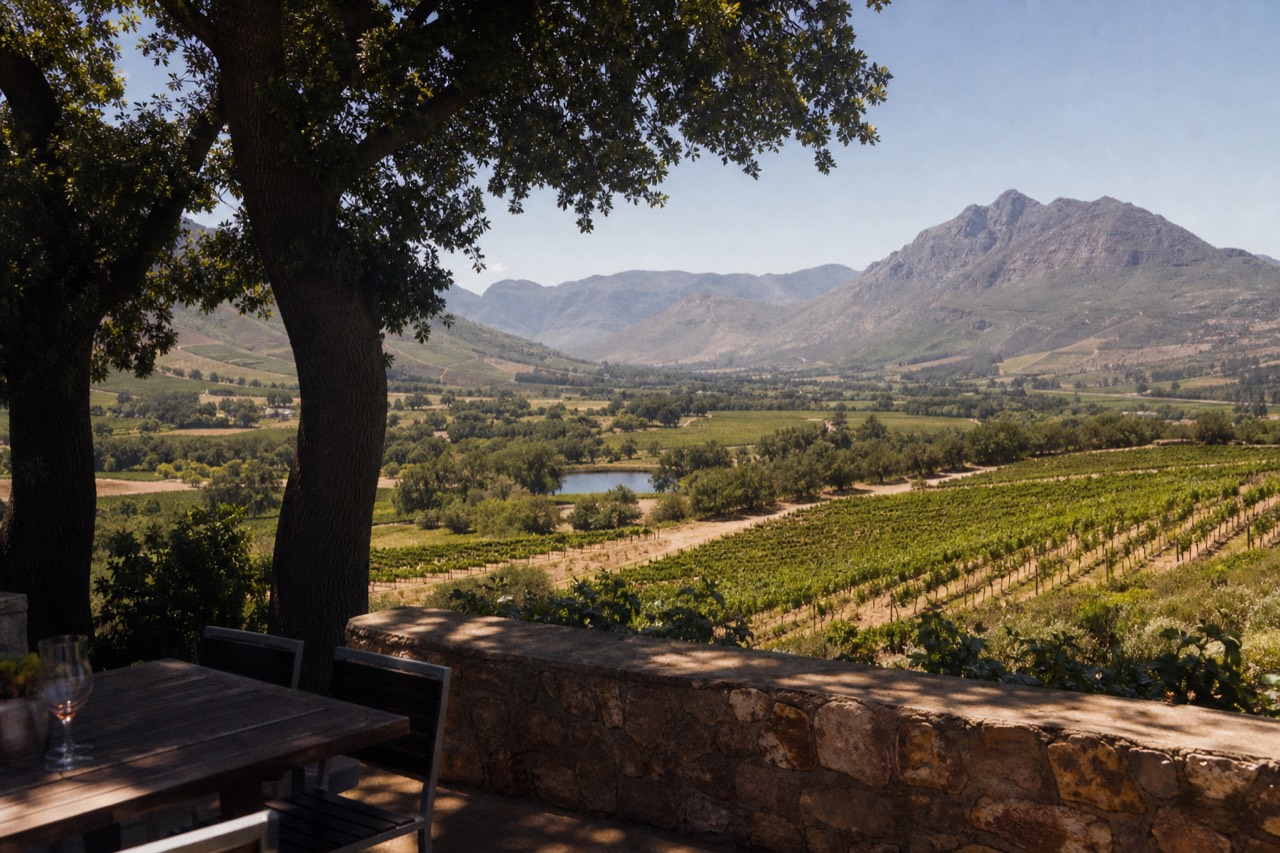
Franschhoek is roughly 75 km from central Cape Town, and the drive takes about 60 to 70 minutes depending on the route and traffic. That single fact drives almost every planning decision: it is close enough for an easy day trip, but far enough, and inland enough, that the transport choice genuinely shapes the day. A self-driver has total freedom but a strict legal limit; a tour passenger can taste freely and let someone else handle the Helshoogte Pass.
This article walks through the four realistic ways to make the trip: renting a car and self-driving, using ride-hailing apps, booking an organized winelands tour, and the transfer-plus-Wine-Tram combination that has become the most popular option. It also covers what a tasting day actually costs once you arrive, because the fare to get there is only part of the budget.
How do I go from Cape Town to Franschhoek?
You have four realistic options: self-drive roughly 75 km via the N1 and R45 in about 60 to 70 minutes, use Uber or Bolt for a point-to-point ride, book an organized winelands tour with hotel pickup, or take a coach transfer that connects to the Franschhoek Wine Tram. Each suits a different kind of day, and the right one depends mainly on how much you plan to taste.
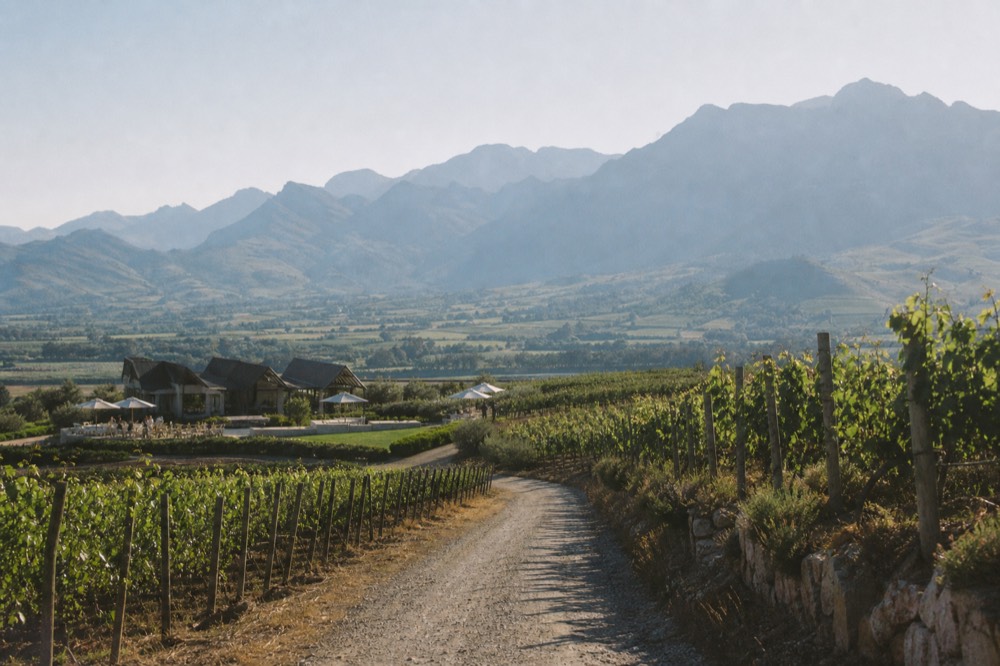
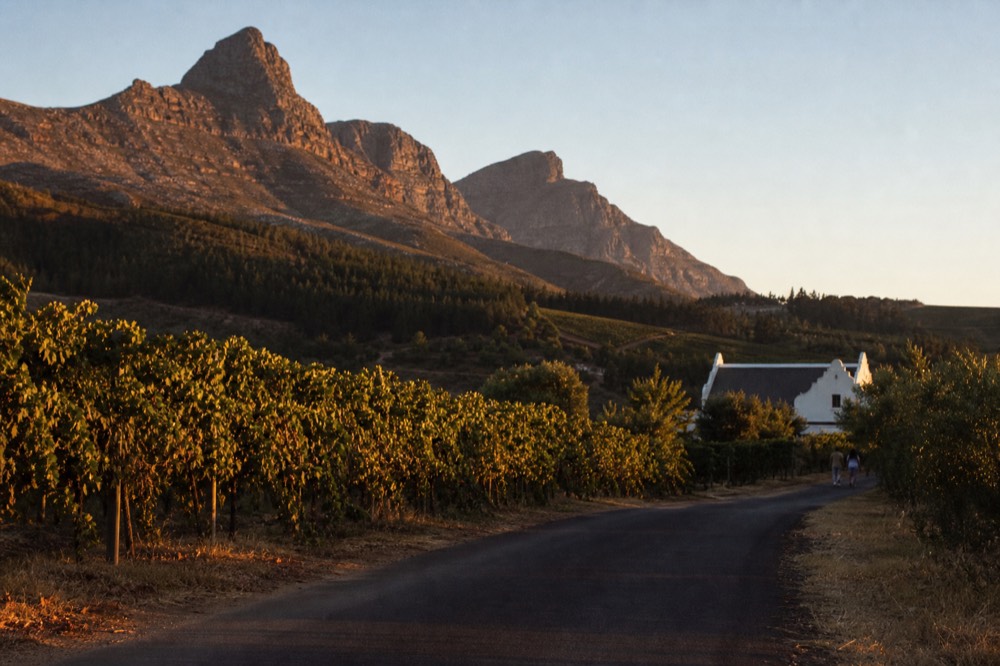
The route itself is straightforward. Most traffic leaves the city on the N1, and Franschhoek sits about 30 minutes further inland from Stellenbosch, usually reached via the scenic Helshoogte Pass or the R45 through Paarl. The last stretch is where the landscape changes from suburban Cape Flats to mountain-ringed vineyard country, and it is one of the prettier approach drives in the Western Cape.
What surprises many first-time visitors is that the transport question is really a drinking-law question in disguise. South Africa's ordinary drink-driving limit is 0.05 g of alcohol per 100 ml of blood, and a signed zero-tolerance law is not yet in force. Four or five estate tastings will push most people past the legal limit, so the honest framing, the same one locals use in Cape Town travel forums, is not "which way is cheapest" but "who is driving home."
That is why organized options dominate the conversation. A tour or transfer package removes the sober-driver problem entirely, and the Franschhoek Wine Tram itself, once you are in the valley, is hop-on-hop-off so nobody in your group needs the car keys at all.
Is it better to self-drive, take an Uber, or book a tour?
Self-drive is cheapest and most flexible but leaves one person unable to taste freely; Uber or Bolt works for point-to-point trips but gets expensive and unreliable for multi-estate hopping; an organized tour costs more upfront but includes a driver held to a stricter professional blood-alcohol limit of 0.02 g per 100 ml, meaning everyone in the group can taste.
The professional-driver detail matters more than most visitors realize. Under the National Road Traffic Act, drivers holding a Professional Driving Permit, a category covering many tour and shuttle drivers, are held to 0.02 g per 100 ml rather than the ordinary 0.05 limit. A booked driver is not just convenient, they are legally held to a higher standard on the same roads you would be driving yourself.
Self-drive still makes sense in specific situations. If your group has a designated non-taster, or you are visiting one or two estates with a long lunch between, a rental car gives you total control of timing and route. The Helshoogte Pass between Stellenbosch and Franschhoek is worth the detour in clear weather. Just remember that parking at popular estates fills by midday in peak season, roughly December through February.
Ride-hailing is the awkward middle option. An Uber or Bolt from central Cape Town to Franschhoek covers about 75 km each way, so the round trip adds up quickly, and more importantly, hailing a ride back from a rural estate at 4 pm is not dependable. Locals use ride-hailing for one-way legs, for example into Franschhoek village for a restaurant dinner, rather than for a full estate-hopping day.
| Option | Best for | Main trade-off | Approximate cost per person |
|---|---|---|---|
| Rental car (self-drive) | Designated-driver groups, flexible itineraries | One person cannot taste; parking pressure in peak season | Rental day rate plus fuel, split across the group |
| Uber or Bolt | One-way legs, single-destination visits | Costly over the full round trip; unreliable pickup at estates | Metered per trip, roughly 75 km each way |
| Organized winelands tour | Tasting-focused days, first-time visitors | Fixed itinerary and start time | Check the operator's live listing |
| Transfer plus Wine Tram | Independent-minded visitors who still want a driver | Tram loops only, timed to the tram schedule | Transfer package price on the operator's listing |
A full-day guided option bundles the drive, several estates and often lunch into one price, and the Check availability link shows current dates and inclusions. For a fuller comparison of guided tours against the tram and private drivers, see our guide on wine tram versus guided tour options.
How much does a wine tasting at Franschhoek cost?
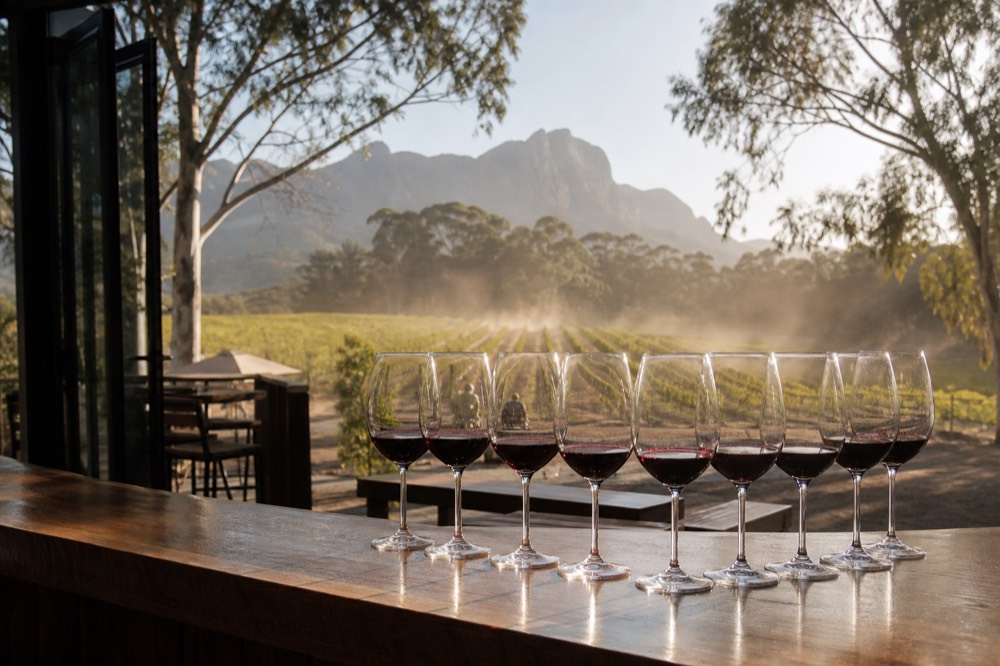
Plan on roughly R80 to R250 per person for a standard tasting flight at Franschhoek estates, with premium and paired tastings running higher, and note that fees are commonly waived or refunded when you buy a bottle, so the real out-of-pocket cost often lands at the low end if you purchase wine.
That range is a planning allowance drawn from the practical norm across the Cape Winelands, not a promise from any single estate. A boutique estate pouring small-production Chenin Blanc will price differently from a large estate running a high-volume cellar door, and paired tastings, chocolate, charcuterie or cellar-aged verticals, sit above the standard flight. Check the estate's own site or ask when booking.
The Wine Tram ticket is separate from tastings. The hop-on-hop-off ticket costs R350 per adult, R90 for children aged 3 to 17, and under-3s ride free. Tastings and meals at the estates are paid separately, typically in the R60 to R260 range per person. So a realistic tram-day budget is the ticket plus one or two tasting fees plus lunch, with the bottle-purchase waiver often softening the final tally.
| Cost item | Typical planning range | Notes |
|---|---|---|
| Standard tasting flight | R80-R250 pp | Often waived or refunded with a bottle purchase |
| Paired or premium tasting | Above the standard flight | Estate-specific, book ahead |
| Wine Tram hop-on-hop-off ticket | R350 adult, R90 child 3-17 | Under 3 free; tastings and meals extra |
| Estate tastings on tram routes | R60-R260 pp | Paid at each estate |
One more planning note: advance reservations are widely recommended or required at smaller estates, especially in peak season from November to March, while larger estates often take walk-ins during published hours. If your heart is set on a specific boutique tasting room, book it before you book the transport. It is far easier to shape a transport plan around a confirmed 11 am tasting than to arrive at a full cellar door with no booking and no fallback.
Can you do Franschhoek as a day trip without a car?
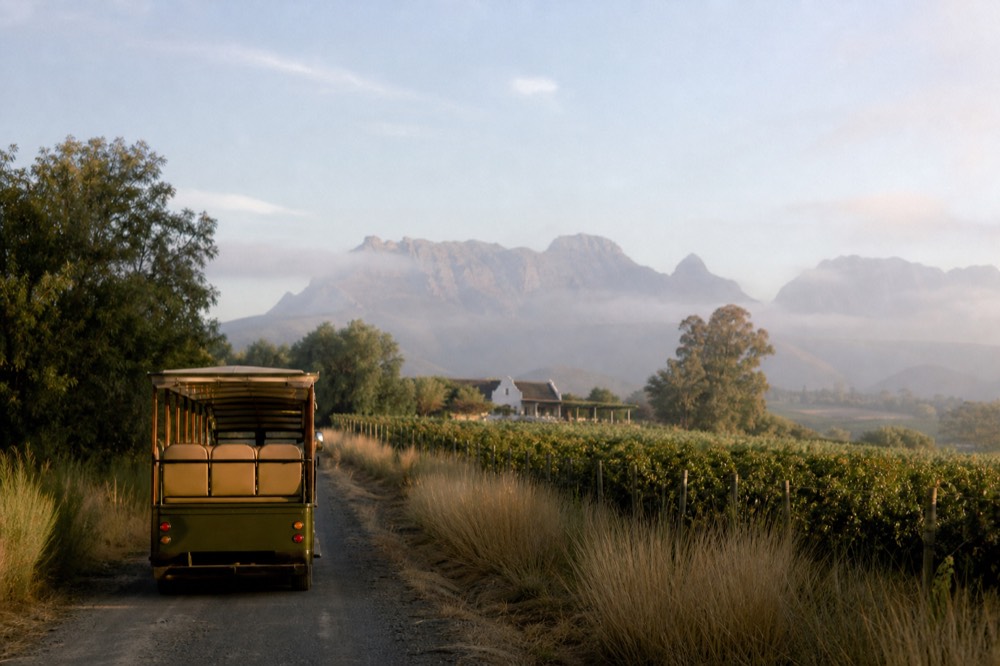
Yes, and it is one of the easiest car-free winelands day trips from Cape Town: coach transfer packages connect the city to the Franschhoek Wine Tram, which then loops five color-coded lines across roughly 30 estates using vintage-style trams and open-air tram-buses, with the tram ticket at R350 per adult.
The mechanics are simple. You take a scheduled transfer from Cape Town, commonly departing from the V&A Waterfront area or hotel pickups, to Franschhoek village, roughly a one-hour drive. From there the Wine Tram takes over: five lines, each covering 7 to 9 estates, running hourly loops with terminals in Franschhoek village or at Groot Drakenstein. You hop off where you like, taste, eat, and catch the next tram. The official operator's site at winetram.co.za carries the current line maps and schedules.
The tram runs daily except major holidays, closing 24-25 December and 31 December-1 January. Popular estates on the various lines include Rickety Bridge, Grande Provence, Boschendal, Vrede en Lust, Plaisir de Merle, Allée Bleue, Haute Cabrière, Mont Rochelle and La Bri. With 7 to 9 estates per line and hourly service, a realistic day is three to four stops, not all of them.
For help choosing among the lines, our guide to which Wine Tram line is best breaks down the differences. Booking the tram-plus-transfer combination ahead is wise in peak season, when December through February demand fills both the coach and the tram loops.
What is the best route: Helshoogte Pass or the N1?
The fastest route from central Cape Town is the N1 toward Paarl and then the R45 into Franschhoek, about 75 km and 60 to 70 minutes, while the Helshoogte Pass route via Stellenbosch is slightly longer but far more scenic, climbing through vineyards between Stellenbosch and the Franschhoek valley.
If time matters, take the N1. It is the default for transfers and tours running to a schedule, and it delivers you to the valley floor with the least fuss. Traffic on the N1 builds during Cape Town morning and evening rush, so a 9 am departure typically beats an 8 am one despite leaving later.
If the day is about the journey as much as the destination, Helshoogte is the route. The pass links Stellenbosch to the Franschhoek side, and the drive along it passes some of the region's best-known estates. Many private tours deliberately route this way to break the drive with a Stellenbosch or Simonsberg-Paarl tasting stop, effectively turning the transfer into a two-region day.
A note on season, because it changes the drive. The Cape Doctor, the strong south-easterly wind that blows from September to March, can make the high passes gusty and the outdoor tastings blustery. Crowding peaks December through February, while September to November and post-harvest March to April offer a better balance of weather, green vines and manageable queues.
However you make the journey, the practical summary is this: match the transport to how much you intend to taste. A sober driver in your group makes self-drive the value pick; everyone else should let a transfer, a tour driver or the tram's own loops carry the day. The valley, its roughly 30 tram-served estates and its restaurants are close enough that no option wastes much of your day on the road. For a broader look at planning a winelands itinerary around the city, the Cape Town Wine Tours homepage gathers the region's main tour options in one place.
The short answers: the trip is roughly 75 km and 60 to 70 minutes by road, a car-free day is easy via a transfer plus the Wine Tram at R350 per adult, standard tastings run about R80 to R250 per person, and the ordinary drink-driving limit is 0.05 g per 100 ml of blood. The details below cover each question travelers ask most.
A few practical points about the drive itself. There is no dedicated bus or train service from central Cape Town into Franschhoek, so without a car you are looking at a private transfer, a scheduled tour, or a ride-hailing trip. Ride-hailing apps do work in the valley, but a car booked out of Franschhoek for the return leg can be thin on weekend evenings, so it is safer to book a return transfer in advance. If you are self-driving, note that the ordinary drink-driving limit is 0.05 g per 100 ml of blood, and tastings add up faster than most visitors expect across a full day of estates.
Fuel and supplies are easy to sort along either route. The N1 corridor through Paarl has the widest choice of fuel stops, and Stellenbosch, at the start of the Helshoogte Pass, is the last convenient place to top up, grab cash or pick up picnic supplies before the pass itself, where services thin out. The pass road is sealed and in good condition, but it is narrow and winding in places, so allow a little more time than the map estimate and take the viewpoints slowly, especially when tour minibuses are on the road in the late afternoon heading back toward Cape Town.
Common questions about getting from Cape Town to Franschhoek
How do I go from Cape Town to Franschhoek?
Drive roughly 75 km in 60 to 70 minutes via the N1 and R45, take an Uber or Bolt point-to-point, book an organized winelands tour with pickup, or use a coach transfer that connects to the Franschhoek Wine Tram. The best choice depends on how much wine you plan to taste, since the ordinary drink-driving limit is 0.05 g per 100 ml of blood.
How long does it take to get from Cape Town to Franschhoek?
About 60 to 70 minutes by road, covering roughly 75 km from central Cape Town. Franschhoek sits around 30 minutes further inland from Stellenbosch, usually via the Helshoogte Pass or the R45 through Paarl, and N1 traffic can add time at rush hours.
Can you visit Franschhoek without a car?
Yes. Transfer packages connect Cape Town to the Franschhoek Wine Tram, a hop-on-hop-off service running five color-coded lines across roughly 30 estates. The tram ticket is R350 per adult, with children 3-17 at R90 and under-3s free; tastings at the estates are paid separately.
How much does a wine tasting at Franschhoek cost?
Plan on R80 to R250 per person for a standard flight, with premium and paired tastings higher, and expect the fee to be commonly waived or refunded when you buy a bottle. On the tram routes, estate tastings typically run R60 to R260 per person on top of the tram ticket.
Is Uber or Bolt a good option for a Franschhoek wine day?
Only for point-to-point legs. The roughly 75 km trip each way adds up quickly on a round trip, and hailing a ride back from a rural estate in the late afternoon is unreliable. Locals use ride-hailing for one-way trips, such as into Franschhoek village for dinner, rather than for multi-estate hopping.
What is the legal drink-driving limit in South Africa?
The ordinary limit is 0.05 g of alcohol per 100 ml of blood, while professional drivers, including many tour and shuttle drivers with a PrDP, are held to a stricter 0.02 g per 100 ml. A signed zero-tolerance law is not yet in force. Tasting rooms also require ID from anyone who appears under 18, and the legal drinking age is 18 nationwide.