Stellenbosch Wine Tractor: What It Is and What to Book Instead
The Stellenbosch Wine Tractor is a real, distinct hop-on-hop-off tractor tour of the region's Golden Triangle estates, and it is not one of the tours this site features. Here is what it actually is, how it compares to the tram and guided options, and the closest bookable alternatives.
Short answer
The Stellenbosch Wine Tractor is an open-air, tractor-drawn hop-on-hop-off wine tour visiting estates in Stellenbosch's Golden Triangle, booked through its own listing. This site does not feature it. The closest bookable alternatives are a Stellenbosch half-day wine tour and multi-region day trips, which we compare below.
Search interest in the "stellenbosch wine tractor" is real and sizable, which is exactly why it deserves a straight answer rather than a sales pitch. The short version: it exists, it is genuinely distinct from the better-known Franschhoek Wine Tram, and it is not one of the tours this site features or sells. This guide explains what the tractor tour actually is, where it fits among the hop-on-hop-off options in the Cape Winelands, and which bookable alternatives come closest if you like the idea of an unhurried, hop-between-estates day in Stellenbosch.
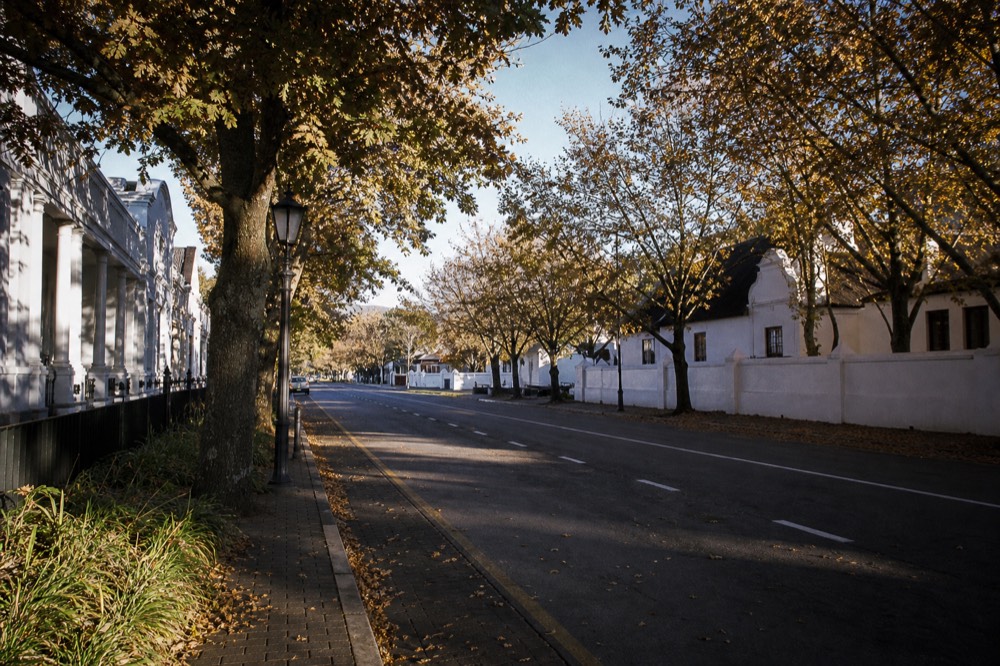
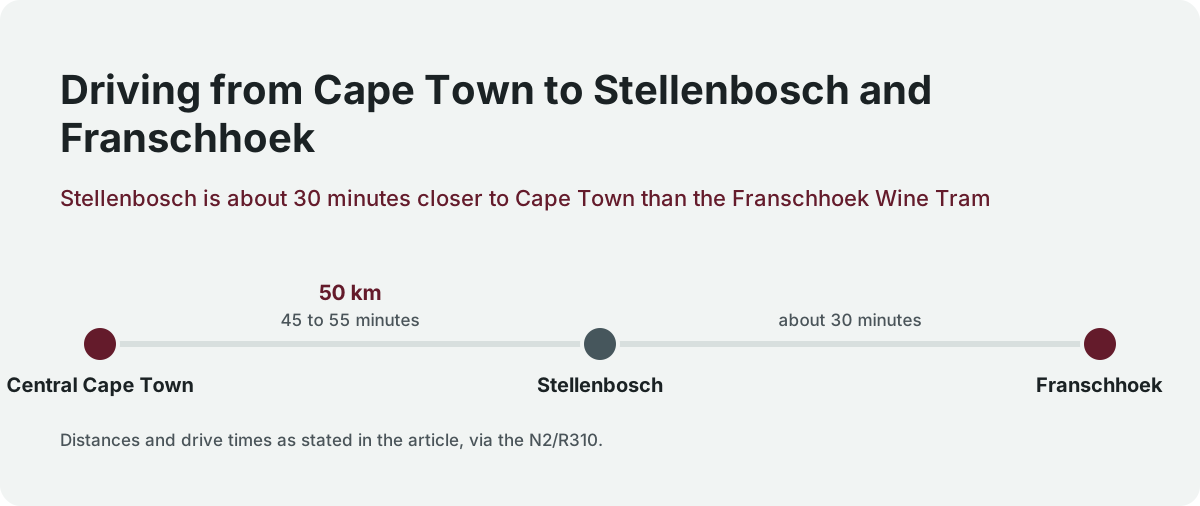
Stellenbosch itself needs little introduction. It sits roughly 50 km from central Cape Town, about 45 to 55 minutes' drive via the N2/R310, and it holds the highest density of wine estates of any winelands town, wrapped around South Africa's second-oldest town centre with oak-lined streets and a walkable core. If you are still deciding between regions, our guide to choosing a wine region breaks down the trade-offs; if you have already settled on Stellenbosch, read on.
What exactly is the Stellenbosch Wine Tractor?
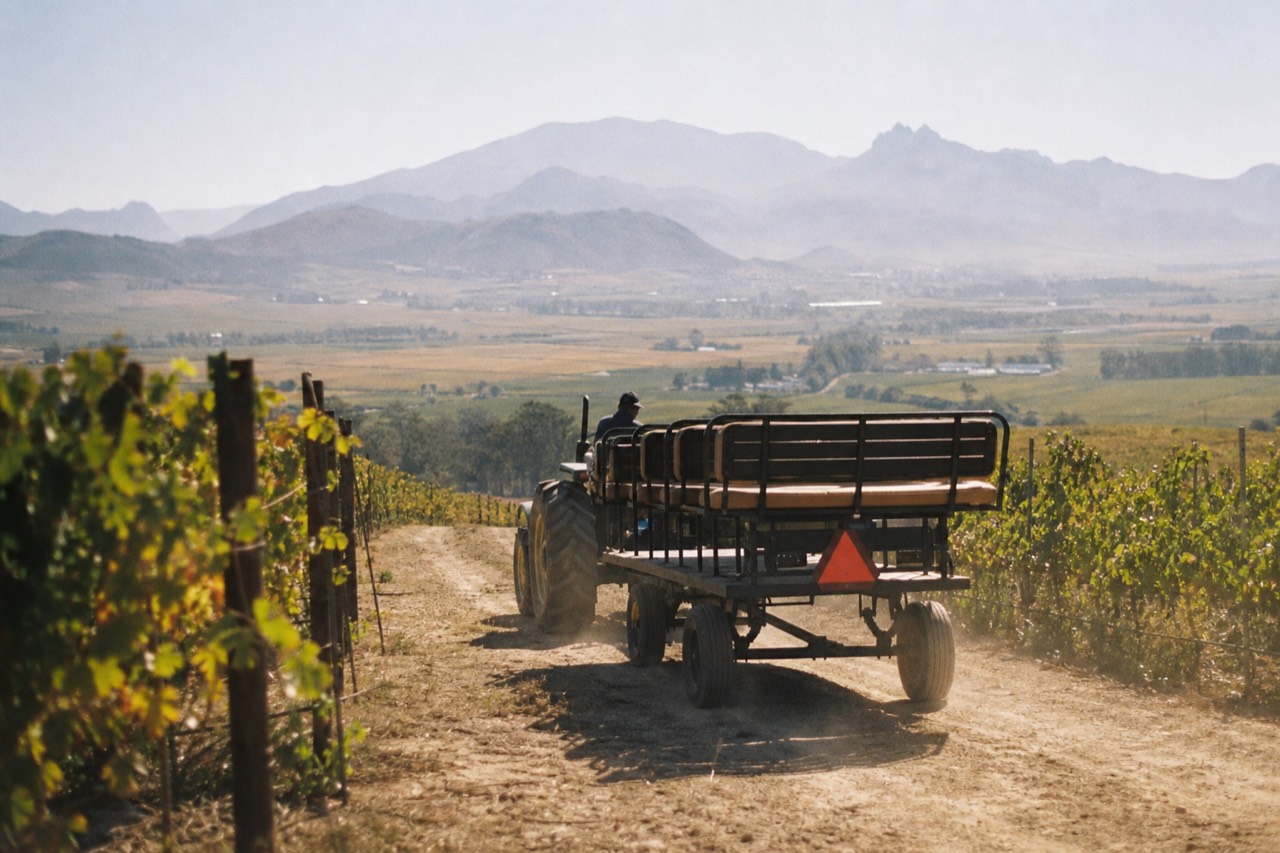
The Stellenbosch Wine Tractor is an open-air, tractor-drawn hop-on-hop-off wine tour that loops between estates in Stellenbosch's "Golden Triangle" wine district, running as an independent product sold through its own listing, and it is not currently one of the tours featured on this site. That last part matters to us: this site features nine curated tours, and the tractor tour is not among them, so we cannot sell it to you, quote its live price with confidence, or bundle it with a transfer from Cape Town. What we can do is describe it honestly.
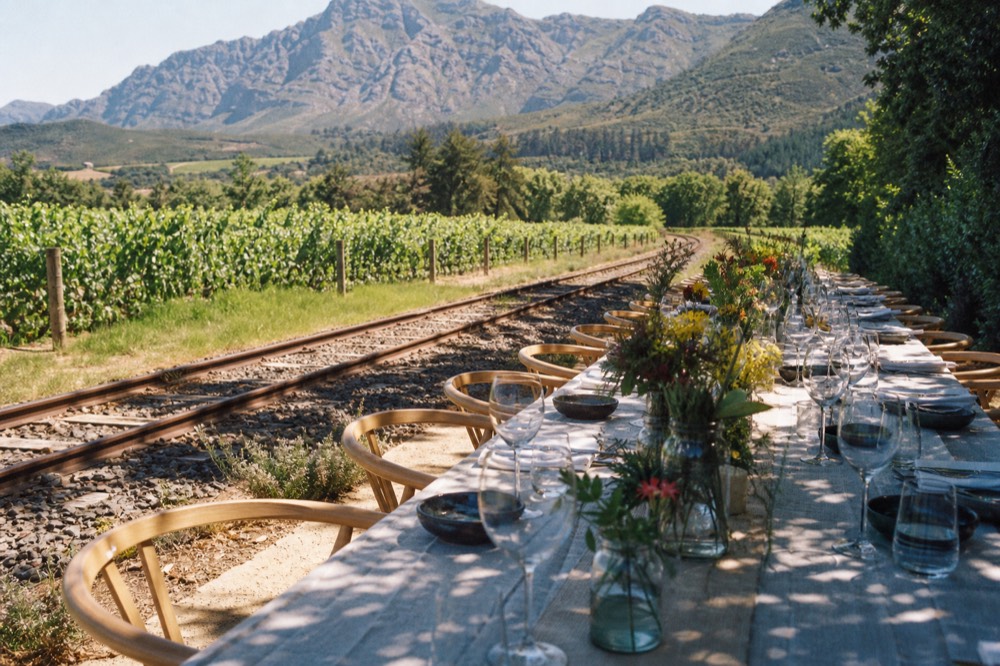
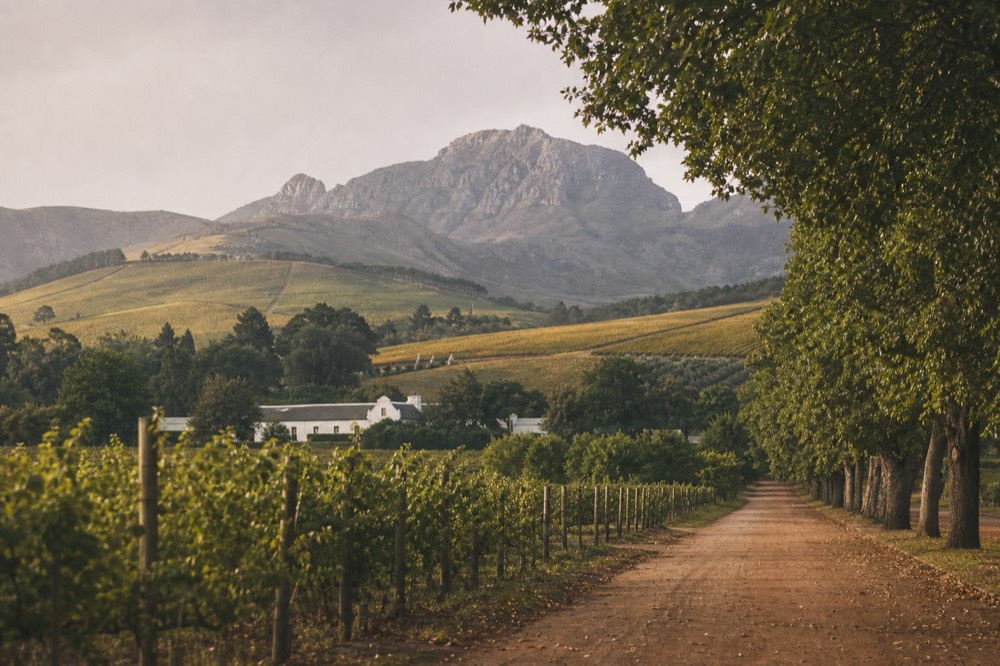
The format is what the name suggests. Instead of the vintage-style rail trams and open-air tram-buses used on the Franschhoek Wine Tram roughly an hour's drive away, the Stellenbosch product uses a tractor pulling an open-air passenger carriage, trundling between a cluster of estates in the Golden Triangle, the pocket of prime vineyard land between the Helderberg and Stellenbosch mountains. Riders hop on and hop off at participating estates, tasting at each stop, with tastings and food paid separately at the estates, the same pay-as-you-go structure the Franschhoek tram uses.
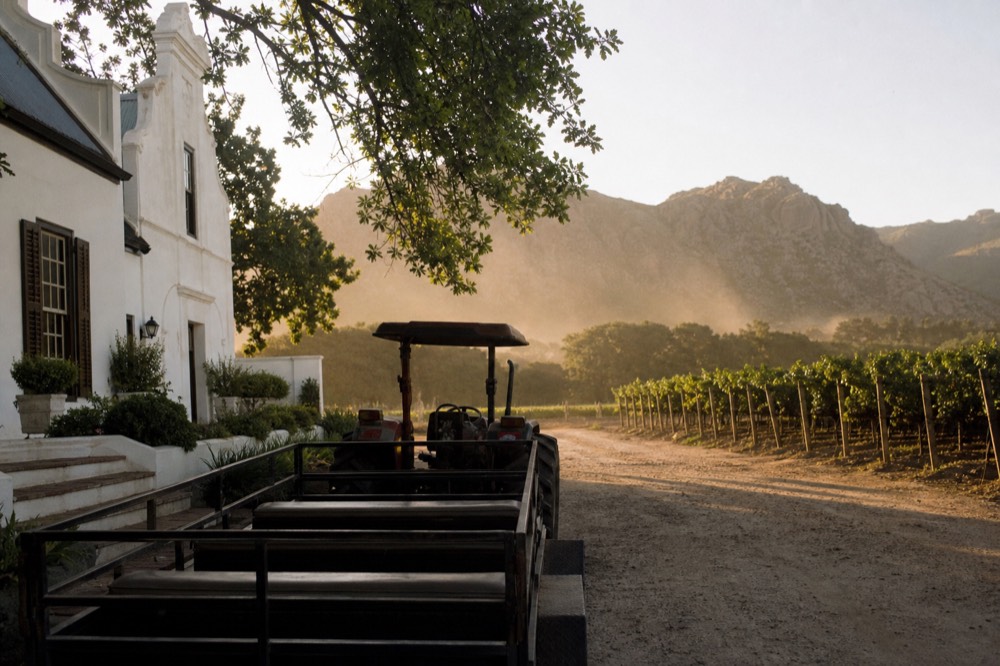
It is a smaller, more local operation than the Franschhoek machine, which runs five color-coded lines covering roughly 30 estates with a published hop-on-hop-off ticket of R350 per adult and R90 for children aged 3 to 17, under-3s free. The tractor tour's own pricing and schedule live on its listing, so check there directly for current figures rather than relying on secondhand numbers. What you should take from this section is the shape of the product: slow, open-air, hop-on-hop-off, Stellenbosch-specific, and booked separately from anything on this site.
How does the tractor tour compare with the Franschhoek Wine Tram?
The Franschhoek Wine Tram is a larger, five-line hop-on-hop-off network covering around 30 estates in the Franschhoek Valley, while the Stellenbosch Wine Tractor is a smaller tractor-based loop of Golden Triangle estates, so the tram wins on coverage and frequency and the tractor wins on proximity if you are already based in or near Stellenbosch. They are frequently confused in search results, sometimes bundled under a vague "Cape Town wine tram" label, but they are separate products run by separate operators in separate valleys.
The practical differences stack up quickly. The tram runs daily except major holidays (24-25 December and 31 December-1 January), with hourly loops on each line and 7 to 9 estates per route; the tractor's schedule and stop list are set by its own operator and published on its listing. The tram sits roughly 75 km, or 60 to 70 minutes' drive, from central Cape Town, about 30 minutes further inland than Stellenbosch via passes like Helshoogte, which makes the tractor the shorter outing if you are staying in Stellenbosch town itself. Tastings are extra at both, typically running R60 to R260 per person per estate in the region.
There is a third hop-on-hop-off player worth naming so the picture is complete: Vine Hopper, a Stellenbosch minibus hop-on-hop-off service running Eastern and Southern routes to estates like Boschendal, Lanzerac and Kleine Zalze. Like the tractor, it is a real product this site does not currently feature. Our Franschhoek Wine Tram guide covers the tram in depth, and the tram-versus-guided-tour-versus-private-driver question is worth weighing separately if you are still deciding on a format at all.
What kind of traveler suits a hop-on-hop-off wine day?
Hop-on-hop-off formats suit flexible, self-directing travelers who want to choose their own estates, linger where they like, and skip anything that does not appeal, while guided and private tours suit travelers who want a set itinerary, a designated driver, and someone else handling the logistics of bookings and timing. Neither is objectively better; the honest answer is that it depends on how much structure you want and whether anyone in your group is happy staying behind the wheel.
The hop-on-hop-off appeal is real. You are not locked to a schedule, you can build a day around two estates rather than four if a long lunch takes over, and the open-air ride between stops is part of the pleasure. The trade-offs are equally real. You carry the tasting costs yourself at each stop, you are bound to the loop's route and frequency rather than a bespoke plan, and in peak season (December through February, into early March) the popular stops fill up, so booking ahead at individual estates is widely recommended across Stellenbosch, Franschhoek, Paarl and Constantia, especially at smaller boutique estates.
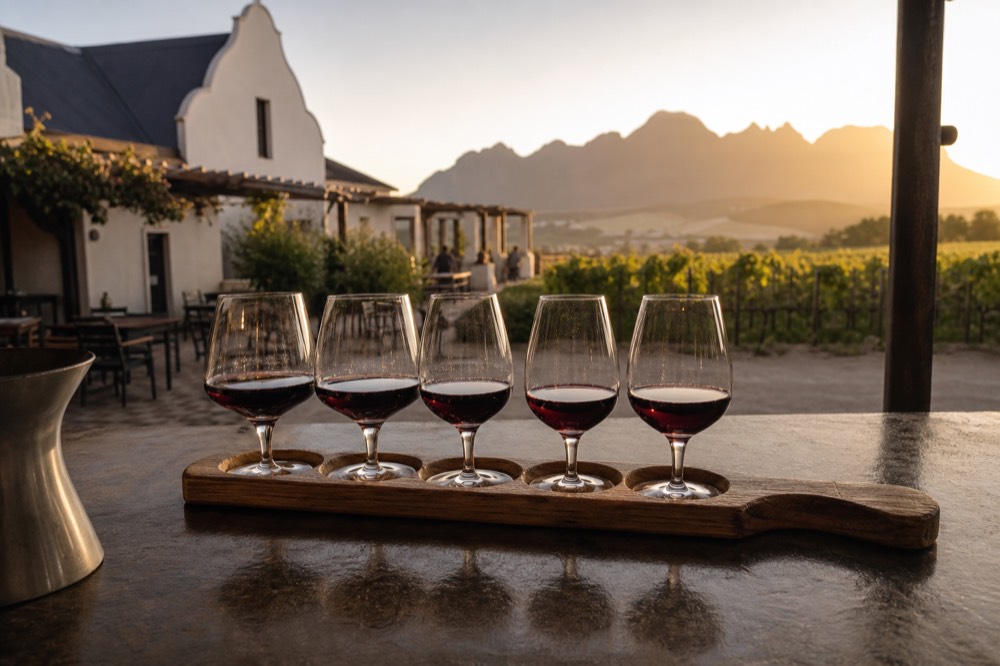
One legal point that travelers rarely hear and that genuinely favors organized tours: South Africa runs a two-tier drink-driving limit under the National Road Traffic Act. Ordinary drivers are held to 0.05 g of alcohol per 100 ml of blood, but professional drivers, a category that includes many tour and shuttle drivers holding a PrDP permit, are held to a stricter 0.02 g. Your own tour driver is legally held to the tougher standard, which is a quiet, concrete argument for letting a professional drive the winelands loop instead of self-driving between tastings. Tasting fees in the region typically run R80 to R250 per person for a standard flight, often waived or credited with a bottle purchase.
| Format | Best for | Pace | Tastings | Bookable here |
|---|---|---|---|---|
| Stellenbosch Wine Tractor | Hop-on-hop-off purists based in Stellenbosch | Slow, loop-bound | Paid per estate | No, via its own listing |
| Franschhoek Wine Tram | Coverage and frequency, food-focused valley | Hourly loops, 5 lines | Paid per estate, R60-R260 typical | No, via its own listing |
| Guided small-group tour | Set itinerary, no driving decisions | Fixed, 3-5 estates | Usually included | Yes |
| Private driver tour | Custom routes, special occasions | Fully custom | Varies by tour | Yes |
What are the closest bookable alternatives to the tractor tour?
The closest bookable alternatives on this site are a Stellenbosch half-day wine tour, which matches the tractor's regional focus and relaxed pace in a guided format, and the multi-region day trips, which trade depth for breadth across Stellenbosch, Franschhoek and Paarl; for travelers who want the tractor's unhurried feel with more comfort, a luxury winelands tour is the nearest match. Since we cannot sell you the tractor ticket, these are the honest substitutes, and each one overlaps with a different part of what the tractor offers.
The Stellenbosch half-day option is the most direct like-for-like. You stay in one region, the pace is moderate rather than rushed, and a guide handles the estate choices and timing, which removes the loop-schedule constraint that hop-on-hop-off formats impose. It also solves the transfer question: the tractor assumes you are already in Stellenbosch, whereas a guided tour typically collects you in Cape Town and returns you there, folding the 45 to 55 minutes of N2 driving each way into the price.
The multi-region day trips go the other way. Rather than going deep on Stellenbosch's Golden Triangle, they sample Stellenbosch, Franschhoek and Paarl in one day, which makes sense for visitors on a short Cape Town stay who want the winelands overview rather than one district done slowly. Franschhoek adds its gourmet-village character and French Huguenot heritage; Paarl adds broader valleys, fewer crowds and a working-farm feel with bigger reds and fortified styles. The cost of that breadth is pace: expect fewer stops per region and more time in the vehicle.
For travelers drawn to the tractor's open-air, slow-travel romance but wanting more comfort and flexibility, the luxury winelands tour is the closest featured match. It keeps the day unhurried, leans on premium estates, and leaves the driving to a professional held to that stricter 0.02 blood-alcohol limit. Our Stellenbosch wine tours from Cape Town guide compares the featured Stellenbosch options in detail.
How does a tractor-style day actually flow in Stellenbosch?
A tractor-style day in Stellenbosch flows as a loop: arrive in town, board at the starting point, ride between three or four Golden Triangle estates with a tasting at each, break for a long lunch at one stop, and roll back by late afternoon, with the whole day shaped by the loop's frequency rather than your own watch. That flow is the format's signature, and it is worth understanding before you commit, because it is both the pleasure and the constraint.
The rhythm suits Stellenbosch well. The town has the highest estate density of the winelands, so short hops genuinely mean short hops, and the walkable town centre with its oak-lined streets and independent restaurant scene gives you a natural end-of-day anchor. The 2025 World's 50 Best Vineyards list, announced in November 2025, placed two Stellenbosch estates on it: Tokara at #71 and Delaire Graff at #79, both re-entries. The region's tasting rooms have been investing too: Neil Ellis Wines on Helshoogte Pass unveiled a renovated tasting room with a new restaurant in October 2025, and Avontuur Estate in the Helderberg opened an upgraded cellar-door venue seating up to 70 guests.
Timing matters more than most first-time visitors expect. Peak crowding runs December through February into early March, coinciding with school holidays and the harvest, or "crush", which typically runs late January through April. Shoulder periods, September through November and post-harvest March into April, balance thinner crowds against still-active cellar doors. A spring visit in September or October brings warming days and blooming landscapes without the summer queues, though harvest-season energy and grape-stomping events are absent then. Our Cape Town wine tour guide covers the seasonal calendar in full.
| Period | Crowds | What you get | Trade-off |
|---|---|---|---|
| Dec - early Mar (peak) | Highest | Full summer weather, harvest energy from late Jan | Queues, booking essential |
| Late Jan - Apr (harvest) | High | Crush activity, festive cellar doors | Same peak crowds early on |
| Sep - Nov (spring) | Lower | Warming days, fewer visitors, wildflowers | No harvest activity |
| May - Aug (winter) | Lowest | Quiet tasting rooms, indoor tastings | Cool, wet weather, reduced schedules |
What does a winelands day cost once you add everything up?
A winelands day costs three layers: transport (a hop-on-hop-off ticket, a tour price, or a driver), tastings at each estate, and food, with regional tasting fees typically running R80 to R250 per person per flight and often credited against a bottle purchase, so the sticker price of any single ticket is only part of the total. This is where hop-on-hop-off and guided formats genuinely diverge, and it is worth doing the arithmetic before choosing.
On a hop-on-hop-off day, the base ticket buys movement only. Add four estates at typical tasting fees and a vineyard lunch, and the per-person total climbs quickly, though you retain full control of how many stops you make. On a guided tour, the headline price is higher but tastings are usually included, and the transfer from Cape Town, which would otherwise be a separate cost or a self-drive commitment, is folded in. A full cost breakdown for wine tours out of Cape Town is worth reading before you commit either way.
Two cost levers are worth knowing. First, tasting fees are commonly waived or refunded when you buy a bottle, which effectively converts a tasting fee into a down payment on something you were probably buying anyway. Second, spitting is standard and encouraged at South African tasting rooms, with buckets provided, particularly for anyone tasting across multiple estates in a day, which is both a cost-saver (you buy less) and the only responsible posture if anyone in your group is driving.
Which format should you actually choose for Stellenbosch?
Choose the tractor-style hop-on-hop-off format if you are based in Stellenbosch, want maximum control over your stops, and are happy booking through its own listing; choose a guided Stellenbosch half-day if you want the same regional focus with logistics handled; and choose a multi-region or luxury tour if your priority is breadth or comfort over hop-on-hop-off freedom. The deciding factors are your base, your group, and how much of the day you want to own.
Base location is the first filter. If you are staying in Stellenbosch town, the tractor's starting point is walkable and the format makes sense. If you are staying in Cape Town, every winelands day starts with a 45 to 55 minute drive each way, and a tour or transfer that absorbs that drive is usually the better arithmetic than self-driving or piecing together rides. Group composition is the second filter: mixed groups with non-drinkers, or anyone who wants to taste fully rather than sip-and-spit, are better served by a professional driver held to the stricter limit.
The table below compresses the decision into the four situations travelers most often start from. Find the row that matches your trip and the right-hand column gives the honest answer, including the cases where the tractor itself is the right call even though you will book it elsewhere.
| Your situation | Best fit | Why |
|---|---|---|
| Staying in Stellenbosch, want freedom | Wine Tractor (book via its own listing) | Walkable start, loop-based, pay per estate |
| Staying in Cape Town, half a day free | Stellenbosch half-day guided tour | Transfer included, region-focused, tastings usually included |
| Short Cape Town stay, want the overview | Multi-region day trip | Three towns in one day, breadth over depth |
| Special occasion or comfort-first trip | Luxury winelands tour | Unhurried pace, premium estates, professional driver |
Finally, honesty about what this site can and cannot do for you. We do not feature the Stellenbosch Wine Tractor, the Franschhoek Wine Tram, or Vine Hopper; all three are real products booked through their own listings. What Cape Town Wine Tours features are guided and private tours, and the three below are the ones that best match what draws people to the tractor in the first place: a slow, open-ended-feeling day among Stellenbosch's estates, with the driving and the planning taken off your plate.
These are the questions travelers ask most often about the Stellenbosch Wine Tractor: what it is, whether it is the same product as the Franschhoek Wine Tram, whether it can be booked through this site, what is and is not included in a hop-on-hop-off ticket, and how Stellenbosch stacks up against Franschhoek for this style of day. Each answer below is short, factual, and honest about what this site does and does not feature.
Common questions about the Stellenbosch Wine Tractor
What is the Stellenbosch Wine Tractor?
An open-air, tractor-drawn hop-on-hop-off wine tour looping between estates in Stellenbosch's Golden Triangle district. It is a real, independently operated product, booked through its own listing, and it is not one of the tours featured on this site.
Is the Stellenbosch Wine Tractor the same as the Franschhoek Wine Tram?
No. The Franschhoek Wine Tram is a five-line network covering roughly 30 estates in the Franschhoek Valley, about 60 to 70 minutes' drive from Cape Town, while the tractor is a smaller loop based in Stellenbosch, about 45 to 55 minutes away. Separate operators, separate valleys, separate tickets.
Can I book the Stellenbosch Wine Tractor through this site?
No. This site features nine guided and private tours and the tractor is not among them. Book it directly through its own listing, or consider the featured Stellenbosch half-day wine tour as the closest guided alternative.
Are tastings included on hop-on-hop-off wine tours?
Generally no. On hop-on-hop-off formats, including the tram and the tractor, the ticket covers transport only and tastings are paid at each estate, typically R80 to R250 per person for a standard flight, often credited against a bottle purchase. Guided tours usually include tastings in the headline price.
Is Stellenbosch or Franschhoek better for a hop-on-hop-off day?
Franschhoek has the bigger, more frequent hop-on-hop-off network and a compact gourmet-village centre; Stellenbosch has higher estate density, a walkable historic town and a shorter drive from Cape Town. Our head-to-head on the two towns goes deeper if you are torn.
Do I need to book wineries ahead in Stellenbosch?
Widely recommended, and required at some estates. Advance booking is standard practice across the winelands, especially at smaller boutique estates and during peak season from November to March. Larger commercial estates often take walk-ins during published hours when capacity allows.