What are the best vineyards to visit near Cape Town?
A region-by-region guide to the best vineyards near Cape Town, from Klein Constantia's world-ranked estate to Stellenbosch and Franschhoek standouts, with drive times, tasting fees and how to reach each one.
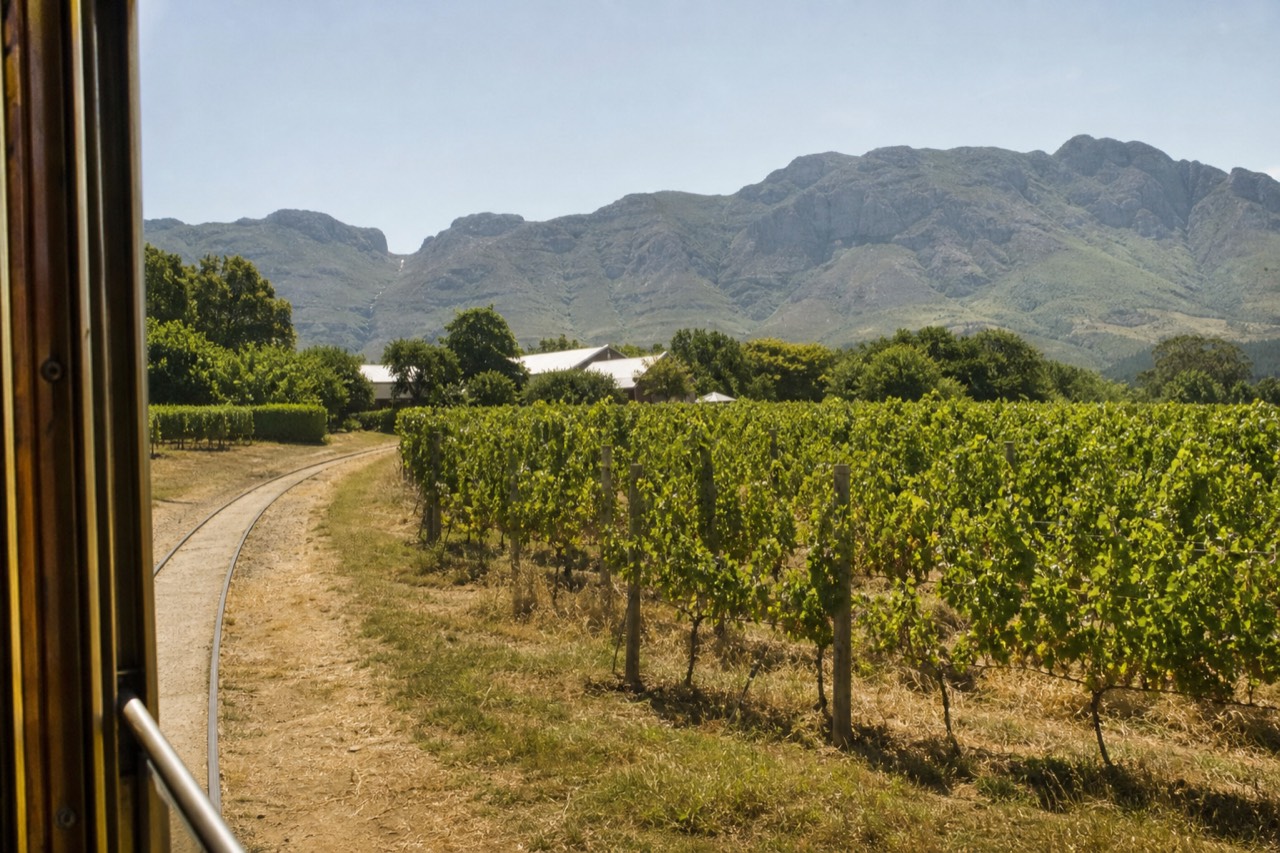
What are the best vineyards to visit near Cape Town?
The best vineyards near Cape Town are Klein Constantia, Groot Constantia and Steenberg in Constantia, Tokara and Delaire Graff in Stellenbosch, and La Motte in Franschhoek. This shortlist rests on results rather than opinion: all six hold recognitions on record from the latest award cycles, and Klein Constantia was ranked number 6 in the World's 50 Best Vineyards 2025 list, named Best Vineyard in Africa.
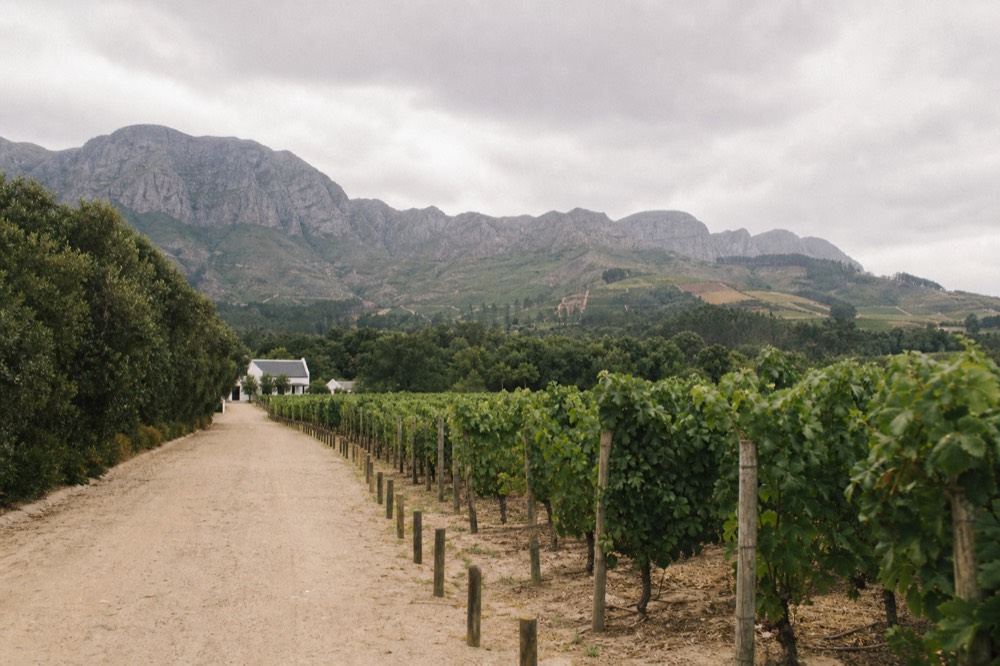
Most first-time visitors assume "vineyards near Cape Town" means a full-day trip to the Winelands. It does not have to. Constantia is inside Cape Town's southern suburbs, a short drive down the M3, so you can taste at a 340-year-old estate in the morning and be back at the Waterfront by mid-afternoon. The town of Stellenbosch, South Africa's second-oldest, is about 45-55 minutes from central Cape Town via the N2, and Franschhoek is roughly 60-70 minutes, about 30 minutes further inland from Stellenbosch through the Helshoogte Pass.
The six estates below earned their places through results, not marketing. Three of them appear on the World's 50 Best Vineyards 2025 list, announced in November 2025 in Margaret River, Australia, and the South African government publicly congratulated the six local vineyards that made the list. You can read that statement on the official government news site.
How you reach them matters as much as which you pick. Tasting fees typically run R80 to R250 per person for a standard flight, often waived or refunded with a bottle purchase, and South Africa's drink-driving limit for ordinary drivers is 0.05 g per 100 ml of blood, while professional tour drivers are held to a stricter 0.02. Those two numbers alone are a fair argument for letting someone else drive.
Which vineyard in Cape Town is considered the best?
By the only objective measure available, Klein Constantia is the best vineyard in Cape Town. In November 2025 it was ranked number 6 in the World's 50 Best Vineyards 2025, named Best Vineyard in Africa, and awarded Highest Climber after rising 35 places from its 2024 position. No other vineyard inside Cape Town's city limits holds a comparable ranking, so any "best" claim beyond that result would be invented.
Klein Constantia is the historic estate behind Vin de Constance, the sweet wine that carried the Constantia name across Europe in the 18th and 19th centuries. The World's 50 Best Vineyards list is judged by a panel of hundreds of wine and travel experts worldwide, and the 2025 edition placed only six South African vineyards on it. Klein Constantia at number 6 was the highest of them all.
Its neighbor Groot Constantia has its own recent result: the estate's Grand Constance won a gold medal at the Muscats du Monde International Wine Competition in Burgundy, France, in July 2025, and was recognized among the world's top 10 Muscats. Groot Constantia was granted to Simon van der Stel on 13 July 1685 and is widely described as South Africa's oldest wine-producing estate, with continuous production since then. A 2025 article referenced the estate receiving over 450,000 visitors annually, which tells you it is also the most crowded of the Constantia estates.
If you want the "best" without qualification, Klein Constantia is the answer the rankings support. If you want the most historic and the most accessible, Groot Constantia is a 20-25 minute drive from the City Bowl and you can walk its grounds, cellar and manor house between tastings. The estate also hosts the annual Wine Harvest Commemorative Event each February, a fixture on the South African wine calendar that honors industry figures, so timing a visit around it can add something beyond the tasting room. Our Constantia wine tour guide covers the valley's estates, restaurants and booking quirks in detail.
Which vineyards can you visit without leaving Cape Town?
Constantia is the answer: it lies inside Cape Town's southern suburbs, roughly 20-25 minutes from the City Bowl via the M3, and holds three of the six estates on this shortlist. Groot Constantia, Klein Constantia and Steenberg all sit in the valley, and Steenberg actually predates Groot Constantia, having been granted in 1682 to Catharina Ras, the first recorded female landowner at the Cape.
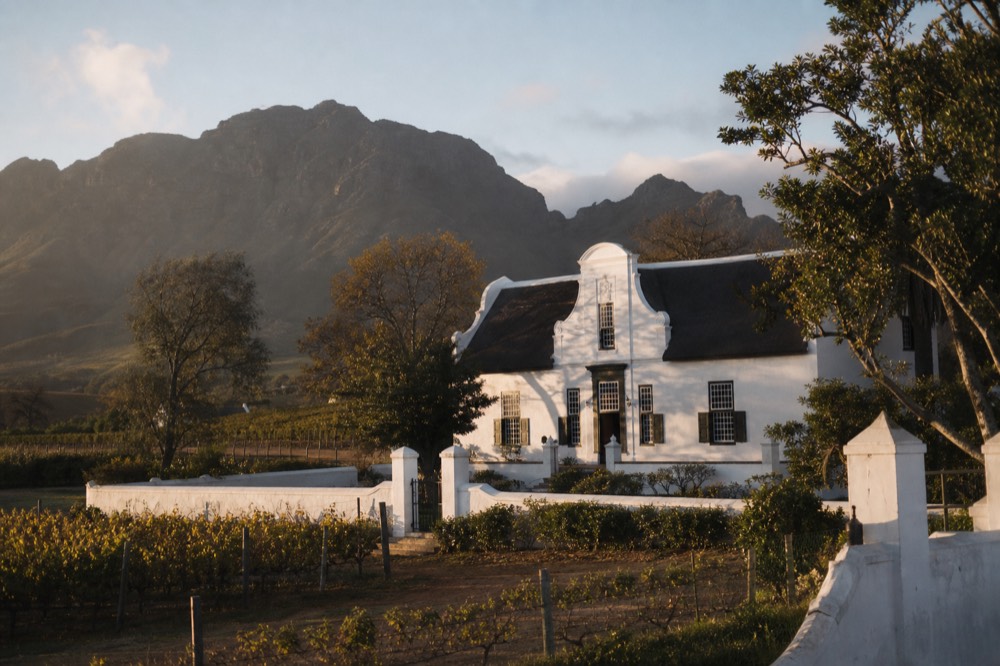
Steenberg is the quiet surprise of the valley. It is three years older than Groot Constantia and far less visited, with a restaurant scene that earned mentions in the JHP Gourmet Guide 2026 alongside Chefs Warehouse at Beau Constantia. For travelers who want world-class wine without the Groot Constantia crowds, it is the local's pick.
The valley also runs its own events calendar. In late October 2025, The Cellars-Hohenort announced its first "Tastes of the Valley" event, limited to 100 guests across sessions and featuring tastings from six Constantia estates: Beau Constantia, Eagles' Nest, Buitenverwachting, Groot Constantia, Steenberg and Constantia Glen. The annual Pick n Pay Wine and Food Festival also returned to the Constantia area in late April 2026, featuring South African producers. Neither requires an overnight stay; both are reachable by a short taxi or tour ride from anywhere in the city bowl.
For most visitors the practical choice is a half-day. The Groot Constantia hop-on tasting tour handles the transfer and the tasting reservation in one booking, which matters because smaller Constantia estates often require advance booking, especially from November to March. Cape Town Wine Tours lists the Constantia options side by side so you can compare inclusions before committing.
Which Stellenbosch vineyards are worth the drive?
Tokara and Delaire Graff are the Stellenbosch standouts, ranked number 71 and number 79 respectively in the World's 50 Best Vineyards 2025 list, both re-entries onto the list. Stellenbosch is approximately 50 km from central Cape Town, a 45-55 minute drive via the N2, and it has the highest density of wine estates of any town in South Africa.
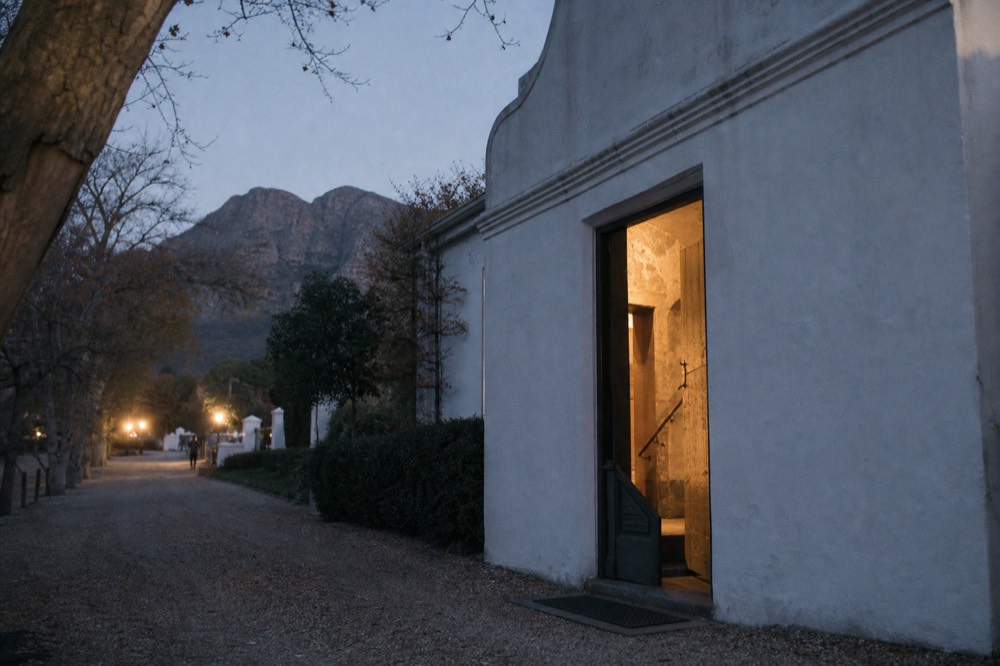
Tokara pairs its vineyards with an olive estate and a sculpture garden, and Delaire Graff sits on Helshoogte Pass with a lodge, spa and art collection that make it one of the most photographed tasting rooms in the country. Both are on the 2025 list alongside La Motte in Franschhoek, which means the Stellenbosch-Franschhoek corridor alone holds three of the world's ranked vineyards within about 30 minutes of each other.
The town itself rewards a full day. Stellenbosch is a university town with oak-lined streets, walkable lanes and a restaurant scene that runs independently of tourism. In the Diners Club 2025 Winemaker of the Year awards, announced November 2025, Stellenbosch-linked winners included Coenie Snyman for overall Winemaker of the Year and Marnich Aucamp for Young Winemaker of the Year. The Platter's South African Wine Guide 2026 also highlighted Stellenbosch wines of the year, including Oldenburg Per Se 2022 Cabernet Sauvignon and Tokara Limited Release Pinotage 2023.
New openings keep the region fresh. Neil Ellis Wines on Helshoogte Pass unveiled a renovated tasting room with a new restaurant in October 2025, and Annandale Wines opened the Toevlug family-friendly eatery in a historic farmhouse the same month. Avontuur Estate on the Helderberg side upgraded its cellar door venue for up to 70 guests. The 2025 Eat Out Awards added one-star mentions for several Stellenbosch-area restaurants, among them Eike, Hoseki, Post & Pepper and Rykaart's Restaurant at Longridge, so the food now rivals the wine as a reason to go.
What about Franschhoek's top vineyards?
La Motte is Franschhoek's ranked vineyard, entering the World's 50 Best Vineyards 2025 list at number 94 as a new entry. Franschhoek is roughly 75 km and 60-70 minutes from central Cape Town, a smaller, food-driven gourmet village with French Huguenot heritage, and it is also home to the Franschhoek Wine Tram, the hop-on-hop-off service covering around 30 estates across five color-coded lines.
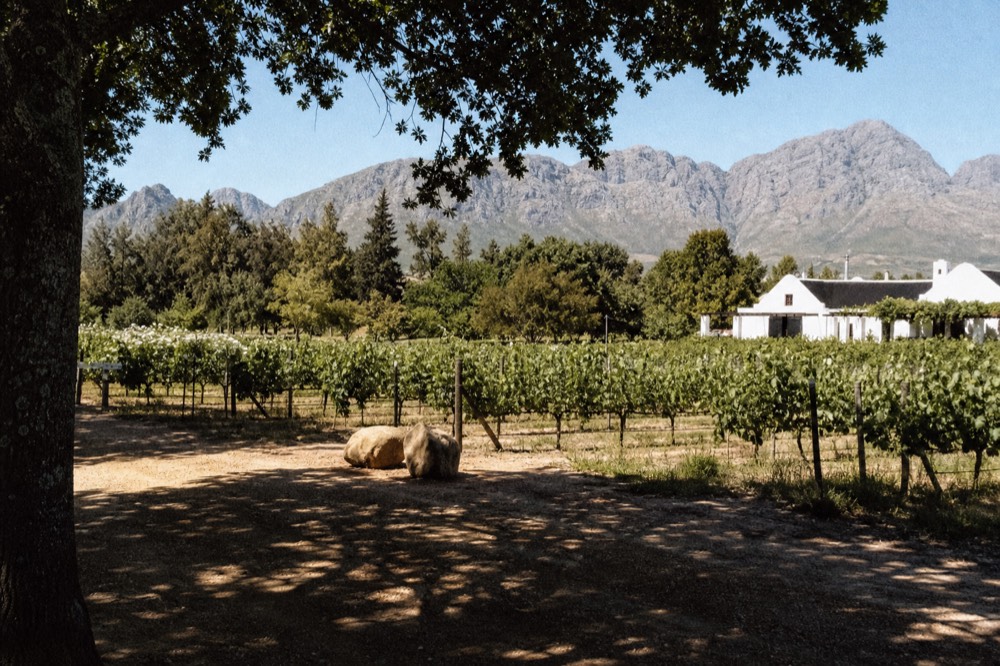
La Motte pairs its ranking with serious food credentials: the 2025 Eat Out Awards included one-star mentions for several Franschhoek restaurants, among them Chefs Warehouse at Maison, Le coin Français and Orangerie at Le Lude. The estate also hosted the return of JAN Franschhoek, the Michelin-starred chef Jan Hendrik van der Westhuizen pop-up dining experience, for a fifth season running September 2026 to April 2027. During harvest it runs the La Motte Harvest Experience, with sessions at 10:00 and 15:00 from late January through mid-March.
Franschhoek's other draw is the tram itself. The hop-on-hop-off ticket costs R350 per adult, with children 3-17 at R90 and under-3s free, and tastings at the estates are extra, typically R60 to R260 per person. The tram runs daily except major holidays such as 24-25 December and 31 December-1 January. If you are weighing the tram against a guided tour or a private driver, our Wine Tram versus guided tour comparison breaks down the trade-offs line by line.
The valley keeps adding reasons to go. Rupert & Rothschild Vignerons launched a reimagined separate tasting room with a wine library in October 2025, and Boschendal opened Arum, a fire-focused farm-to-fire restaurant in its 1812 cellar, in November 2025. Between the ranked estate, the tram and the restaurant openings, Franschhoek has arguably the deepest single-day itinerary of the three Winelands towns.
How do you actually get to these vineyards?
You have four realistic options: a guided group tour, a private driver, the Franschhoek Wine Tram for Franschhoek only, or self-driving. Self-driving is legal but constrained: the ordinary blood-alcohol limit is 0.05 g per 100 ml, while professional drivers including tour and shuttle drivers are held to 0.02, so an organized tour is the safer structure for a multi-estate day. Advance booking is widely recommended at smaller estates, especially November to March.
The drinking age is 18 nationwide, and tasting rooms are legally required to ask for ID from anyone who looks under 18 before serving. Spitting buckets are standard and encouraged when tasting across multiple estates in a day, particularly for anyone driving afterward. A zero-tolerance limit has been signed into law but is not yet in force, so the two-tier limits above are the ones that apply on the road today.
| Region | Drive from central Cape Town | Standout vineyards | Best fit |
|---|---|---|---|
| Constantia | 20-25 min via the M3 | Klein Constantia, Groot Constantia, Steenberg | Half-day, no long drive |
| Stellenbosch | ~50 km, 45-55 min via the N2 | Tokara, Delaire Graff | Full day, town plus estates |
| Franschhoek | ~75 km, 60-70 min | La Motte plus ~30 tram estates | Full day, food and tram |
| Paarl | ~55-70 km, 50-60 min via the N1 | Quieter working estates, bigger reds | Value and fewer crowds |
Tasting fees usually run R80 to R250 per person for a standard flight, commonly waived or refunded with a bottle purchase, so check with each estate before you go. Larger estates such as Spier in Stellenbosch often accommodate walk-ins during published hours; smaller boutique estates and anything in Constantia during peak season is safer booked ahead.
Paarl deserves a clause here even though no Paarl estate made the ranked shortlist. It is the largest of the three Winelands towns by population, a quieter working agricultural place with broader valleys, fewer queues at tastings and more value-oriented experiences, focused on bigger reds and fortified styles. If your priority is wine over scenery and Instagram, it is the sleeper pick of the region.
For choosing between the regions themselves, our which wine region to choose guide compares Constantia, Stellenbosch, Franschhoek and Paarl on crowds, cost and character, and it is the right next read if you only have one day.
The six vineyards that top most lists near Cape Town are Klein Constantia, Groot Constantia and Steenberg in Constantia, Tokara and Delaire Graff in Stellenbosch, and La Motte in Franschhoek, chosen here on real ranking results rather than taste. Constantia is a 20-25 minute drive from the City Bowl, Stellenbosch about 45-55 minutes, and Franschhoek 60-70 minutes. The questions below cover the details travelers ask most.
Common questions about vineyards near Cape Town
What are the best vineyards to visit near Cape Town?
Klein Constantia, Groot Constantia and Steenberg in Constantia, Tokara and Delaire Graff in Stellenbosch, and La Motte in Franschhoek. All six hold recognitions on record from the latest award cycles, and Klein Constantia holds the strongest result: number 6 in the World's 50 Best Vineyards 2025, named Best Vineyard in Africa.
Which vineyard in Cape Town is considered the best?
Klein Constantia, by the only objective measure available. It ranked number 6 in the World's 50 Best Vineyards 2025 list and was named Best Vineyard in Africa, the highest-placed South African vineyard. No other vineyard inside Cape Town holds a comparable ranking.
Can you visit vineyards without leaving Cape Town?
Yes. Constantia lies inside Cape Town's southern suburbs, roughly 20-25 minutes from the City Bowl via the M3, and holds Groot Constantia, Klein Constantia and Steenberg. It is the only wine region reachable as a short half-day without a Winelands drive.
How far are the vineyards from Cape Town?
Constantia is 20-25 minutes away. Stellenbosch is approximately 50 km, a 45-55 minute drive via the N2. Franschhoek is roughly 75 km, 60-70 minutes, about 30 minutes further inland from Stellenbosch. Paarl is about 55-70 km, 50-60 minutes via the N1.
How much do wine tastings cost at these vineyards?
Tasting fees typically run R80 to R250 per person for a standard flight, with premium tastings higher, and the fee is commonly waived or refunded with a bottle purchase. Check with each estate before you go, and book ahead at smaller estates from November to March.
Is it better to drive yourself or take a tour to the vineyards?
A tour is the safer structure for a multi-estate day. The ordinary blood-alcohol limit for drivers is 0.05 g per 100 ml, while professional tour drivers are held to a stricter 0.02, and organized tours remove the judgment call entirely. Self-driving works for a single-estate visit such as Groot Constantia.